KI-Beratung Beta

Gutscheinbedingungen

**Gültig bis 05.10.2026 ab einem Mindestbestellwert von 30€ auf Spielzeug, Schreibwaren, Filme, Geschenke & Trends, Musik, tolino eReader & Zubehör, Hörbücher und Hörbuch-Downloads, nicht preisgebundene Bücher und Kalender online auf thalia.at und in der Thalia App. Einzelne Artikel können ausgeschlossen sein. Aufgrund der Buchpreisbindung sind deutschsprachige Bücher und eBooks ausgenommen. Zusätzlich ausgenommen sind Abos & Flatrates, Games, Geschenkkarten/-boxen, Shelfies, Software, Zeitschriften sowie einzelne Artikel von tonies®. Pro Einkauf einmal einlösbar. Nur gültig mit im Onlineshop hinterlegter Bonuscard. Click & Collect nur bei Onlinevorabzahlung möglich. Keine Barauszahlung. Nicht kombinierbar mit anderen Aktionen und Gutscheinen. Gutschein wird auf max. 500€ Bestellwert angerechnet. Nicht gültig für Versandkosten und Services. Preisgebundene Artikel sind vom Mindestbestellwert ausgeschlossen.

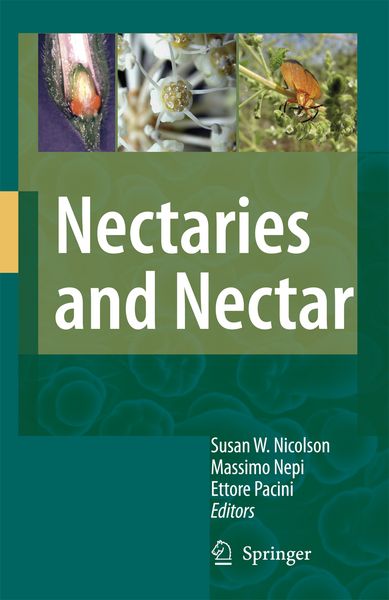
  • Produktbild: Nectaries and Nectar
  • Produktbild: Nectaries and Nectar
- 12%

Nectaries and Nectar

12% sparen

192,99 € UVP 219,99 €

inkl. gesetzl. MwSt., Versandkostenfrei


Beschreibung

Produktdetails

Einband

Gebundene Ausgabe

Erscheinungsdatum

07.05.2007

Herausgeber

Susan W. Nicolson + weitere

Verlag

Springer Netherland

Seitenzahl

396

Maße (L/B/H)

24,1/16/3 cm

Gewicht

758 g

Auflage

2007

Sprache

Englisch

ISBN

978-1-4020-5936-0

Beschreibung

Rezension

From the reviews:


"Nectaries and nectar is a welcome effort that provides a comprehensive review of the advances made in the last three decades in the study of nectary systematics, structure, and ultrastructure, as well as nectar production, presentation, chemistry, molecular biology, nectar consumers, and ecology. … the big advantage of this book is that it is written by experts in the field. … Overall there is much to recommend this book as a major reference text and resource for the many biologists … ." (Lynn S. Adler, Ecology, Vol. 89 (4), 2008)

Portrait

Sue Nicolson is a New Zealander who obtained her PhD in insect physiology from the University of Cambridge. She is a professor in the Department of Zoology and Entomology at the University of Pretoria, South Africa, and her main research interest is in ecophysiological aspects of nectar feeding in insects and birds.

Massimo Nepi was awarded a PhD in agricultural biology in 1995. He is currently employed as researcher at the Department of Environmental Sciences of the University of Siena, where he carries out studies concerning the reproductive biology of angiosperms. In recent years his main research interest has been nectar and nectary biology.

Ettore Pacini graduated in botany in 1967 at the University of Siena, where he is still engaged as full professor of Botany. His main research interest has been higher plant reproduction, first from a cytological point of view and also from an ecological point of view during the last two decades. Recently he became a member of the prestigious Accademia dei Lincei, the first Scientific Academy, founded in 1604.

Produktdetails

Einband

Gebundene Ausgabe

Erscheinungsdatum

07.05.2007

Herausgeber

Verlag

Springer Netherland

Seitenzahl

396

Maße (L/B/H)

24,1/16/3 cm

Gewicht

758 g

Auflage

2007

Sprache

Englisch

ISBN

978-1-4020-5936-0

Herstelleradresse

Springer-Verlag GmbH
Tiergartenstr. 17
69121 Heidelberg
DE

Email: ProductSafety@springernature.com

Noch keine Bewertungen vorhanden

Verfassen Sie die erste Bewertung zu diesem Artikel

Helfen Sie anderen Kundinnen und Kunden durch Ihre Meinung.

Kundinnen und Kunden meinen

Bewertungen (0)

  • Produktbild: Nectaries and Nectar
  • Produktbild: Nectaries and Nectar
  • Contributing Authors. Preface. 1. Introduction; E. Pacini, S.W. Nicolson. 1.1 Evolutionary origins. 1.2 Secretions analogous to nectar. 1.3 Floral and extrafloral nectarines. 1.4 Nectar components. 1.5 Organization of this volume. 2. A Systematic Survey of Floral Nectaries; G. Bernardello. 2.1 Introduction. 2.2 Nectaries in gymnosperms. 2.3 Nectaries in angiosperms. 2.3.1 Diversity. 2.3.1.1 Nectar presentation. 2.3.1.2 Structure. 2.3.1.3 Fate. 2.3.1.4 Symmetry. 2.3.1.5 Number. 2.3.1.6 Colour. 2.3.2 Factors influencing nectary diversity. 2.3.3 Basic types of floral nectarines. 2.3.4 Nectariferous spurs. 2.3.5 Patterns of variability in nectarines. 2.3.5.1 Asteraceae. 2.3.5.2 Brassicaceae. 2.3.5.3 Cucurbitaceae. 2.3.5.4 Euphorbiaceae. 2.3.5.5 Ranunculaceae. 2.3.5.6 Solanaceae. 2.3.6 Nectaries and deceit pollination. 2.3.6.1 Apocynaceae. 2.3.6.2 Bignoniaceae. 2.3.6.3 Orchidaceae. 2.3.7 Relictual nectarines in anemophilous species. 2.3.8 Distribution of nectary types. 2.3.8.1 Early-branching lineages. 2.3.8.2 Magnoliids. 2.3.8.3 Early-branching monocots. 2.3.8.4 Monocots. 2.3.8.5 Commelinids. 2.3.8.6 Ceratophyllales. 2.3.8.7 Eudicots. 2.3.8.8 Core Eudicots. 2.3.8.9 Rosids. 2.3.8.10 Eurosids I. 2.3.8.11 Eurosids II. 2.3.8.12 Asterids. 2.3.8.13 Euasterids I. 2.3.8.14 Euasterids II. 2.3.9 Evolutionary trends. 3. Nectary Structure and Ultrastructure; M. Nepi. 3.1 Introduction. 3.2 Nectary structure and ultrastructure. 3.2.1 Epidermis. 3.2.1.1 Secretory trichomes. 3.2.1.2 Nectary-modified stomata. 3.2.2 Nectary parenchyma. 3.2.2.1 Patterns of plastid development in nectary parenchyma cells. 3.2.3 Subnectary parenchyma. 3.2.4 Nectary vasculature. 3.3 Gynopleural (septal) nectarines. 3.4 Extrafloral nectarines. 3.5 Nectary histochemistry. 4. Nectar Production and Presentation; E. Pacini, M. Nepi. 4.1 Introduction. 4.2 Nectar secretion mechanism and models of nectary function. 4.3 Dynamics of nectar components. 4.3.1 Nectar reabsortion: resource recovery and homeostasis. 4.3.2 Nectar standing crop. 4.4 The source of nectar components. 4.5 Ecophysiological significance of parenchyma plastids. 4.6 Nectar presentation. 4.6.1 Floral nectarines. 4.6.2 Extrafloral nectarines. 4.7 Fate of nectar and nectarines. 4.8 Variability of nectar characteristics. 4.8.1 Environmental variables. 4.8.2 Intraspecies variability. 4.8.3 Interpopulation differences. 4.8.4 Variability and experimental design. 5. Nectar Chemistry; S.W. Nicolson, R.W. Thornburg. 5.1 Introduction. 5.2 Water. 5.2.1 Nectar concentration. 5.2.2 Chemical and microclimatic influences on nectar concentration. 5.2.3 Viscosity and feeding rates. 5.3 Sugars. 5.3.1 Constancy of sugar composition within species. 5.3.2 The use of sugar ratios can be misleading. 5.3.3 Is sugar composition determined by floral visitors or common ancestry? 5.4 Inorganic ions. 5.5 Amino acids. 5.5.1 Non-protein amino acids. 5.5.2 Nectar amino acids are under the control of environmental factors. 5.5.3 Contribution of amino acids to the taste of nectar. 5.6 Proteins. 5.6.1 Proteins in leek nectar. 5.6.2 Nectar redox cycle. 5.7 Other nectar constituents. 5.7.1 Lipids. 5.7.2 Organic acids. 5.7.3 Phenolics. 5.7.4 Alkaloids. 5.7.5 Terpenoids. 5.8 Conclusion. 6. Molecular Biology of the Nicotiana Floral Nectary; R.W. Thornburg. 6.1 Introduction. 6.2 The ornamental tobacco nectary. 6.3 Developmental processes. 6.3.1 Origin of the floral nectary. 6.3.2 Conversion of chloroplasts into chromoplasts. 6.3.3 Filling of the nectary. 6.4 Protection of the gynoecium. 6.5 Gene expression. 6.5.1 Macroarray analysis indentifies defence genes. 6.5.1.1 Role of hydrogen peroxide in plant stress and defence. 6.5.1.2 Role of ascorbate in plant stress and defence. 6.5.2 EST analysis. 6.5.3 Nectary-specific gene expression. 6.6 Nectary molecular biology in other species. 6.6.1 Other n