Gutscheinbedingungen

**Gültig bis 15.06.2026 auf Spiele & Spielzeug online auf thalia.at, in der Thalia App ab einem Mindestbestellwert von 30€ und in allen Thalia Buchhandlungen in Österreich. In den Buchhandlungen nur gültig auf lagernde Ware. Einzelne Artikel können ausgeschlossen sein. Ausgenommen sind preisgebundene Artikel sowie online auf thalia.at und in der Thalia App einzelne Artikel von tonies®. Pro Einkauf einmal einlösbar. Nur gültig gegen Vorlage oder im Onlineshop hinterlegter Bonuscard. Infos zur Einlösung in der Buchhandlung sind auf der Bonuscard-Vorteilspreisseite zu finden. Click & Collect nur bei Onlinevorabzahlung möglich. Keine Einlösung bei Scan & Go-Bezahlung. Keine Barauszahlung. Nicht kombinierbar mit anderen Aktionen und Gutscheinen. Gutschein wird auf max. 500€ Bestellwert angerechnet. Nicht gültig für Geschenkkarten, Versandkosten und Services.

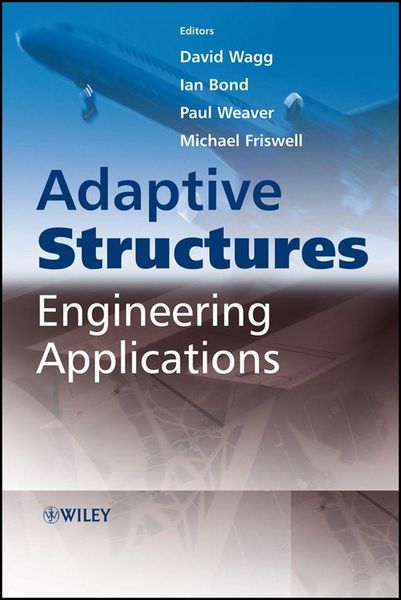
Produktbild: Adaptive Structures

Adaptive Structures Engineering Applications

169,99 €

inkl. gesetzl. MwSt., Versandkostenfrei


Beschreibung

Produktdetails

Einband

Gebundene Ausgabe

Erscheinungsdatum

01.07.2007

Herausgeber

David Wagg + weitere

Verlag

John Wiley & Sons

Seitenzahl

344

Maße (L/B/H)

23,8/15,9/2,4 cm

Gewicht

567 g

Auflage

1. Auflage

Sprache

Englisch

ISBN

978-0-470-05697-4

Beschreibung

Produktdetails

Einband

Gebundene Ausgabe

Erscheinungsdatum

01.07.2007

Herausgeber

Verlag

John Wiley & Sons

Seitenzahl

344

Maße (L/B/H)

23,8/15,9/2,4 cm

Gewicht

567 g

Auflage

1. Auflage

Sprache

Englisch

ISBN

978-0-470-05697-4

Herstelleradresse

Libri GmbH
Europaallee 1
36244 Bad Hersfeld
DE

Email: Libri GmbH

Kundinnen und Kunden meinen

0 Bewertungen

Informationen zu Bewertungen

Zur Abgabe einer Bewertung ist eine Anmeldung im Konto notwendig. Die Authentizität der Bewertungen wird von uns nicht überprüft. Wir behalten uns vor, Bewertungstexte, die unseren Richtlinien widersprechen, entsprechend zu kürzen oder zu löschen.

Die Bewertungen sind nach Format, Anzahl Sterne und Datum sortiert.

Verfassen Sie die erste Bewertung zu diesem Artikel

Helfen Sie anderen Kund*innen durch Ihre Meinung

Kundinnen und Kunden meinen

0 Bewertungen filtern

  • Produktbild: Adaptive Structures
  • List of Contributors xi

    Preface xvii

    1 Adaptive Structures for Structural Health Monitoring 1
    Daniel J. Inman and Benjamin L. Grisso

    1.1 Introduction 1

    1.2 Structural Health Monitoring 4

    1.3 Impedance-Based Health Monitoring 6

    1.4 Local Computing 8

    1.5 Power Analysis 11

    1.6 Experimental Validation 13

    1.7 Harvesting, Storage and Power Management 18

    1.7.1 Thermal Electric Harvesting 19

    1.7.2 Vibration Harvesting with Piezoceramics 22

    1.8 Autonomous Self-healing 25

    1.9 The Way Forward: Autonomic Structural Systems for Threat Mitigation 27

    1.10 Summary 29

    Acknowledgements 30

    References 30

    2 Distributed Sensing for Active Control 33
    Suk-Min Moon, Leslie P. Fowler and Robert L. Clark

    2.1 Introduction 33

    2.2 Description of Experimental Test Bed 35

    2.3 Disturbance Estimation 36

    2.3.1 Principal Component Analysis 36

    2.3.2 Application of PCA: Case Studies 37

    2.3.3 Combining Active Control and PCA to Identify Secondary Disturbances 40

    2.4 Sensor Selection 43

    2.4.1 Model Estimation 45

    2.4.2 Optimal Sensor Strategy 45

    2.4.3 Experimental Demonstration 48

    2.5 Conclusions 55

    Acknowledgments 56

    References 56

    3 Global Vibration Control Through Local Feedback 59
    Stephen J. Elliott

    3.1 Introduction 59

    3.2 Centralised Control of Vibration 61

    3.3 Decentralised Control of Vibration 63

    3.4 Control of Vibration on Structures with Distributed Excitation 67

    3.5 Local Control in the Inner Ear 76

    3.6 Conclusions 84

    Acknowledgements 85

    References 85

    4 Lightweight Shape-Adaptable Airfoils: A New Challenge for an Old Dream 89
    L.F. Campanile

    4.1 Introduction 89

    4.2 Otto Lilienthal and the Flying Machine as a Shape-Adaptable Structural System 91

    4.3 Sir George Cayley and the Task Separation Principle 93

    4.4 Being Lightweight: A Crucial Requirement 95

    4.5 Coupling Mechanism and Structure: Compliant Systems as the Basis of Lightweight Shape-Adaptable Systems 104

    4.5.1 The Science of Compliant Systems 104

    4.5.2 Compliant Systems for Airfoil Shape Adaptation 113

    4.5.3 The Belt-Rib Airfoil Structure 115

    4.6 Extending Coupling to the Actuator System: Compliant Active Systems 118

    4.6.1 The Need for a Coupled Approach 118

    4.6.2 Solid-State Actuation for Solid-State Deformability 120

    4.6.3 Challenges and Trends of Structure-Actuator Integration 123

    4.7 A Powerful Distributed Actuator: Aerodynamics 125

    4.7.1 The Actuator Energy Balance 125

    4.7.2 Balancing Kinematics by Partially Recovering Energy from the Flow 125

    4.7.3 Active and Semi-Active Aeroelasticity 126

    4.8 The Common Denominator: Mechanical Coupling 127

    4.9 Concluding Remarks 128

    Acknowledgements 129

    References 129

    5 Adaptive Aeroelastic Structures 137
    Jonathan Cooper

    5.1 Introduction 137

    5.2 Adaptive Internal Structures 142

    5.2.1 Moving Spars 143

    5.2.2 Rotating Spars 147

    5.3 Adaptive Stiffness Attachments 152

    5.4 Conclusions 159

    5.5 The Way Forward 160

    Acknowledgements 161

    References 162

    6 Adaptive Aerospace Structures with Smart Technologies - A Retrospective and Future View 163
    Christian Boller

    6.1 Introduction 163

    6.2 The Past Two Decades 165

    6.2.1 SHM 167

    6.2.2 Shape Control and Active Flow 170

    6.2.3 Damping of Vibration and Noise 173

    6.2.4 Smart Skins 176

    6.2.5 Systems 177

    6.3 Added Value to the System 179

    6.4 Potential for the Future 185

    6.5 A Reflective Summary with Conclusions 186

    References 187

    7 A Summary of Several Studies with Unsymmetric Laminates 191
    Michael W. Hyer, Marie-Laure Dano, Marc R. Schultz, Sontipee Aimmanee and Adel B. Jilani

    7.1 Introduction and Background 191

    7.2 Room-Temperature Shapes of Square [02/902]T Cross-Ply Laminates 193

    7.3 Room-Temperature Shapes of More General Unsymmetric Laminates 198

    7.4 Moments Required to Change Shapes of Unsymmetric Laminates 200

    7.5 Use of Shape Memory Alloy for Actuation 206

    7.6 Use of Piezoceramic Actuation 210

    7.7 Consideration of Small Piezoceramic Actuators 216

    7.8 Conclusions 228

    References 228

    8 Negative Stiffness and Negative Poisson's Ratio in Materials which Undergo a Phase Transformation 231
    T.M. Jaglinski and R.S. Lakes

    8.1 Introduction 231

    8.2 Experimental Methods 234

    8.2.1 Material Preparation 234

    8.3 Composites 236

    8.3.1 Theory 236

    8.3.2 Experiment 237

    8.4 Polycrystals 238

    8.4.1 Theory 238

    8.4.2 Experimental Results 239

    8.5 Discussion 244

    References 244

    9 Recent Advances in Self-Healing Materials Systems 247
    M.W. Keller, B.J. Blaiszik, S.R. White and N.R. Sottos

    9.1 Introduction 247

    9.1.1 Microcapsule-Based Self-Healing 248

    9.1.2 Critical Issues for Microencapsulated Healing 250

    9.2 Faster Healing Systems - Fatigue Loading 251

    9.3 Smaller Size Scales 253

    9.4 Alternative Materials Systems - Elastomers 256

    9.5 Microvascular Autonomic Composites 258

    9.6 Conclusions 259

    References 260

    10 Adaptive Structures - Some Biological Paradigms 263
    Julian F.V. Vincent

    10.1 Introduction 263

    10.2 Deployment 264

    10.3 Turgor-Driven Mechanisms 266

    10.3.1 The Venus Fly Trap 270

    10.3.2 Previous Theories 271

    10.3.3 Background to an Elastic Model 271

    10.3.4 The Trigger 273

    10.4 Dead Plant Tissues 274

    10.5 Morphing and Adapting in Animals 276

    10.6 Sensing in Arthropods - Campaniform and Slit Sensilla 277

    10.7 Developing an Interface Between Biology and Engineering 279

    10.7.1 A Catalogue of Engineering 279

    10.7.2 Challenging Engineering with Biology 280

    10.7.3 Adaptive Structures - The TRIZ Route 282

    10.7.4 Materials and Information 283

    10.8 Envoi 285

    Acknowledgements 285

    References 285

    Index 289