Gutscheinbedingungen

**Gültig bis 28.07.2026 auf Spielzeug, Schreibwaren, Filme, Geschenke & Trends, Musik, tolino eReader & Zubehör, Hörbücher und Hörbuch-Downloads (außer Abo), nicht preisgebundene Bücher und Kalender in der Thalia App. Einzelne Artikel können ausgeschlossen sein. Aufgrund der Buchpreisbindung sind deutschsprachige Bücher und eBooks ausgenommen. Zusätzlich ausgenommen sind preisgebundene Artikel, Abos & Flatrates, eBooks, Games, Geschenkkarten/-boxen, Shelfies, Software, Zeitschriften sowie einzelne Artikel von tonies®. Pro Einkauf einmal einlösbar. Click & Collect nur bei Onlinevorabzahlung möglich. Keine Barauszahlung. Nicht kombinierbar mit anderen Aktionen und Gutscheinen. Gutschein wird auf max. 500€ Bestellwert angerechnet. Nicht gültig für Versandkosten und Services.

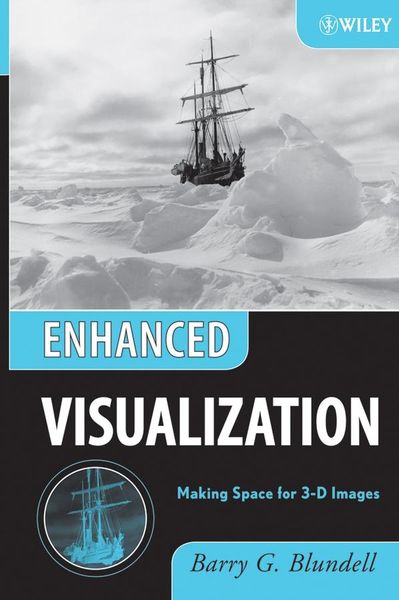
Produktbild: Enhanced Visualization

Enhanced Visualization Making Space for 3-D Images

194,99 €

inkl. gesetzl. MwSt., Versandkostenfrei


Beschreibung

Produktdetails

Einband

Gebundene Ausgabe

Erscheinungsdatum

26.02.2007

Verlag

John Wiley & Sons

Seitenzahl

448

Maße (L/B/H)

23,5/16,2/2,8 cm

Gewicht

748 g

Auflage

1. Auflage

Sprache

Englisch

ISBN

978-0-471-78629-0

Beschreibung

Rezension

"...the book will give you both the scientific and factual basis to express the outcome of the visualisation process in the most effective way." ( British Computer Society Book Reviews )

Produktdetails

Einband

Gebundene Ausgabe

Erscheinungsdatum

26.02.2007

Verlag

John Wiley & Sons

Seitenzahl

448

Maße (L/B/H)

23,5/16,2/2,8 cm

Gewicht

748 g

Auflage

1. Auflage

Sprache

Englisch

ISBN

978-0-471-78629-0

Herstelleradresse

Libri GmbH
Europaallee 1
36244 Bad Hersfeld
DE

Email: GPSR Kontakt

Noch keine Bewertungen vorhanden

Verfassen Sie die erste Bewertung zu diesem Artikel

Helfen Sie anderen Kundinnen und Kunden durch Ihre Meinung.

Kundinnen und Kunden meinen

Bewertungen (0)

  • Produktbild: Enhanced Visualization
  • Preface.
     
    Acknowledgements.
     
    Chapter One. Setting the Scene.
     
    1.1 Introduction.
     
    1.2 Historical Background.
     
    1.3 Working within a 2-D Space.
     
    1.4 Concerning Interaction.
     
    1.5 Image and Interaction Spaces.
     
    1.6 Introducing Volumetric and Varifocal Techniques.
     
    1.7 Discussion.
     
    1.8 Investigations.
     
    Chapter Two. Aspects of the Visual System.
     
    2.1 Introduction.
     
    2.2 Some Characteristics of the Eye.
     
    2.3 Depth Cues.
     
    2.4 Considerations on Image Refresh.
     
    2.5 Discussion.
     
    2.6 Investigations.
     
    Chapter 3. Creative 3-D Display Techniques.
     
    3.1Introduction.
     
    3.2 Display Subsystems.
     
    3.3 Stereoscopic Techniques.
     
    3.4Extending the Stereoscopic Approach.
     
    3.5 The Physical 3-D Image and its Electronic Rendition.
     
    3.6 Multi-view Displays.
     
    3.7 On Painting and Sculpture.
     
    3.8 Discussion.
     
    3.9 Investigations.
     
    Chapter 4. The Swept-Volume Approach.
     
    4.1 Introduction.
     
    4.2 Exemplar Swept-Volume Techniques.
     
    4.3 Swept-Volume Subsystems.
     
    4.4 Parallelism in Voxel Activation.
     
    4.5 Hardware Based Characterisation.
     
    4.6 The Acceptance of Motion.
     
    4.7 Dead Zones.
     
    4.8 Discussion.
     
    4.9 Investigations.
     
    Chapter 5. The Static-Volume Approach.
     
    5.1 Introduction.
     
    5.2 An Elementary Static-Volume Implementation.
     
    5.3 Image Space Composition.
     
    5.4 The Classification of Static-Volume Systems.
     
    5.5 Voxel Visibility.
     
    5.6 Beam Intersection and the Stepwise Excitation of Fluorescence.
     
    5.7 The Photochromic Approach.
     
    5.8 Dead Zones.
     
    5.9 Discussion.
     
    5.10 Investigations.
     
    Chapter 6. Swept-Volume Systems: Limited Viewing Freedom.
     
    6.1 Introduction.
     
    6.2 Image Slices and Image Planes.
     
    6.3 John Logie Baird Makes Space for the Third Dimension.
     
    6.4 Parallel Image Planes Using Translational Motion.
     
    6.5 Parallel Image Planes Using Rotational Motion.
     
    6.6 Discussion.
     
    6.7 Investigations.
     
    Chapter 7. Low Parallelism Swept-Volume Systems.
     
    7.1 Introduction.
     
    7.2 The Planar Screen and Fixed Beam Source(s).
     
    7.3 The Planar Screen and Constant Beam Source Geometry.
     
    7.4 A Helical Screen and Passive SOE.
     
    7.5 Alternative Configurations.
     
    7.6 An Early Volumetric Radar Display.
     
    7.7 Discussion.
     
    7.8 Investigations.
     
    Chapter 8. Highly Parallel Swept-Volume Systems.
     
    8.1 Introduction.
     
    8.2 The Planar Screen and Active Surface of Emission.
     
    8.3 The Planar Screen and Passive Surface of Emission.
     
    8.4 The Helical Screen and Active Surface of Emission.
     
    8.5 The Helical screen and Passive Surface of Emission.
     
    8.6 The Relative Rotations of a Screen and an Array of Light Sources.
     
    8.7 The Spinning Lens Approach.
     
    8.8 Discussion.
     
    8.9 Investigations.
     
    Chapter 9. Static-Volume Systems: Example Implementations.
     
    9.1 Introduction.
     
    9.2 The Use of an Active Matrix of Voxel Generation Elements.
     
    9.3 Voxel Activation Using Directed Beam Sources.
     
    9.4 The DepthCube?
     
    9.5 The Beam Intersection Approach.
     
    9.6 Stacking Image Slices.
     
    9.7 Discussion.
     
    9.8 Investigations.
     
    Chapter 10. Varifocal Mirror Techniques.
     
    10.1 Introduction.
     
    10.2 The Geometry of the Curved Mirror