KI-Beratung Beta

Produktbild: Color Constancy

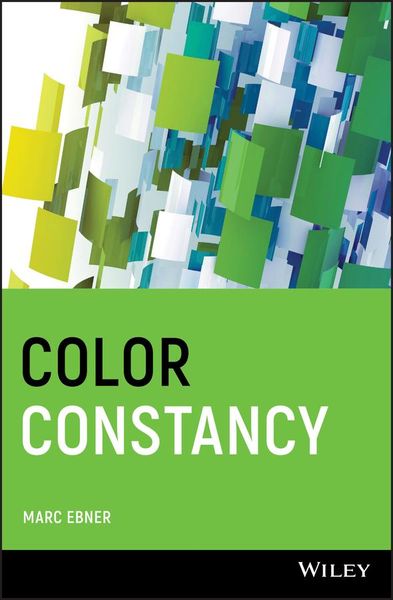
Color Constancy

212,99 €

inkl. gesetzl. MwSt., Versandkostenfrei


Beschreibung

A human observer is able to recognize the color of objects irrespective of the light used to illuminate them. This is called color constancy. A digital camera uses a sensor to measure the reflected light, meaning that the measured color at each pixel varies according to the color of the illuminant. Therefore,...

Beschreibung

A human observer is able to recognize the color of objects irrespective of the light used to illuminate them. This is called color constancy. A digital camera uses a sensor to measure the reflected light, meaning that the measured color at each pixel varies according to the color of the illuminant. Therefore, the resulting colors may not be the same as the colors that were perceived by the observer. Obtaining color constant descriptors from image pixels is not only important for digital photography, but also valuable for computer vision, color-based automatic object recognition, and color image processing in general.
This book provides a comprehensive introduction to the field of color constancy, describing all the major color constancy algorithms, as well as presenting cutting edge research in the area of color image processing. Beginning with an in-depth look at the human visual system, Ebner goes on to:
 
* examine the theory of color image formation, color reproduction and different color spaces;
* discuss algorithms for color constancy under both uniform and non-uniform illuminants;
* describe methods for shadow removal and shadow attenuation in digital images;
* evaluate the various algorithms for object recognition and color constancy and compare this to data obtained from experimental psychology;
* set out the different algorithms as pseudo code in an appendix at the end of the book.
Color Constancy is an ideal reference for practising engineers, computer scientists and researchers working in the area of digital color image processing. It may also be useful for biologists or scientists in general who are interested in computational theories of the visual brain and bio-inspired engineering systems.

Rezension

"I think Ebner s Color Constancy is an excellent summary of current algorithms, and provides empirical tests in a womanlike manner As an inclusive time capsule, it has no parallel, and therefore is a valuable contribution to the field." ( Color Research and Application , June 2008)

Produktdetails

Einband

Gebundene Ausgabe

Erscheinungsdatum

01.06.2007

Verlag John Wiley & Sons Inc
Seitenzahl

408

Produktdetails

Einband

Gebundene Ausgabe

Erscheinungsdatum

01.06.2007

Verlag John Wiley & Sons Inc
Seitenzahl

408

Maße (L/B/H)

25,1/17,7/2,4 cm

Gewicht

1007 g

Auflage

1. Auflage

Sprache

Englisch

ISBN

978-0-470-05829-9

Herstelleradresse

Libri GmbH
Europaallee 1
36244 Bad Hersfeld
DE

Email: gpsr@libri.de

Noch keine Bewertungen vorhanden

Verfassen Sie die erste Bewertung zu diesem Artikel

Helfen Sie anderen Kundinnen und Kunden durch Ihre Meinung.

Kundinnen und Kunden meinen

Bewertungen (0)

Die Leseprobe wird geladen.
  • Produktbild: Color Constancy
  • Series Preface.
     
    Preface..
     
    1 Introduction.
     
    1.1 What is Color Constancy?
     
    1.2 Classic Experiments.
     
    1.3 Overview.
     
    2 The Visual System.
     
    2.1 Eye and Retina.
     
    2.2 Visual Cortex.
     
    2.3 On the Function of the Color Opponent Cells.
     
    2.4 Lightness.
     
    2.5 Color Perception Correlates with Integrated Reflectances.
     
    2.6 Involvement of the Visual Cortex in Color Constancy.
     
    3 Theory of Color Image Formation.
     
    3.1 Analog Photography.
     
    3.2 Digital Photography.
     
    3.3 Theory of Radiometry.
     
    3.4 Reflectance Models.
     
    3.5 Illuminants.
     
    3.6 Sensor Response.
     
    3.7 Finite Set of Basis Functions.
     
    4 Color Reproduction.
     
    4.1 Additive and Subtractive Color Generation.
     
    4.2 Color Gamut.
     
    4.3 Computing Primary Intensities.
     
    4.4 CIE XYZ Color Space.
     
    4.5 Gamma Correction.
     
    4.6 Von Kries Coefficients and Sensor Sharpening.
     
    5 Color Spaces.
     
    5.1 RGB Color Space.
     
    5.2 sRGB.
     
    5.3 CIE L*u*v*Color Space.
     
    5.4 CIE L*a*b*Color Space.
     
    5.5 CMY Color Space.
     
    5.6 HSI Color Space.
     
    5.7 HSV Color Space.
     
    5.8 Analog and Digital Video Color Spaces.
     
    6 Algorithms for Color Constancy under Uniform Illumination.
     
    6.1 White Patch Retinex.
     
    6.2 The Gray World Assumption.
     
    6.3 Variant of Hornâ?(tm)s Algorithm.
     
    6.4 Gamut-constraint Methods.
     
    6.5 Color in Perspective.
     
    6.6 Color Cluster Rotation.
     
    6.7 Comprehensive Color Normalization.
     
    6.8 Color Constancy Using a Dichromatic Reflection Model.
     
    7 Algorithms for Color Constancy under Nonuniform Illumination.
     
    7.1 The Retinex Theory of Color Vision.
     
    7.2 Computation of Lightness and Color.
     
    7.3 Hardware Implementation of Landâ?(tm)s Retinex Theory.
     
    7.4 Color Correction on Multiple Scales.
     
    7.5 Homomorphic Filtering.
     
    7.6 Intrinsic Images.
     
    7.7 Reflectance Images from Image Sequences.
     
    7.8 Additional Algorithms.
     
    8 Learning Color Constancy.
     
    8.1 Learning a Linear Filter.
     
    8.2 Learning Color Constancy Using Neural Networks.
     
    8.3 Evolving Color Constancy.
     
    8.4 Analysis of Chromatic Signals.
     
    8.5 Neural Architecture based on Double Opponent Cells.
     
    8.6 Neural Architecture Using Energy Minimization.
     
    9 Shadow Removal and Brightening.
     
    9.1 Shadow Removal Using Intrinsic Images.
     
    9.2 Shadow Brightening.
     
    10 Estimating the Illuminant Locally.
     
    10.1 Local Space Average Color.
     
    10.2 Computing Local Space Average Color on a Grid of Processing Elements.
     
    10.3 Implementation Using a Resistive Grid.
     
    10.4 Experimental Results.
     
    11 Using Local Space Average Color for Color Constancy.
     
    11.1 Scaling Input Values.
     
    11.2 Color Shifts.
     
    11.3 Normalized Color Shifts.
     
    11.4 Adjusting Saturation.
     
    11.5 Combining White Patch Retinex and the Gray World Assumption.
     
    12 Computing Anisotropic Local Space Average Color.
     
    12.1 Nonlinear Change of the Illuminant.
     
    12.2 The Line of Constant Illumination.
     
    12.3 Interpolation Methods.
     
    12.4 Evaluation of Interpolation Methods.
     
    12.5 Curved Line of Constant Illumination.
     
    12.6 Experimental Results.
     
    13 Evaluation of Algorithms.
     
    13.1 Histogram-based Object Recognition.
     
    13.2 Object Recognition under Changing Ill