Gutscheinbedingungen

**Gültig bis 06.07.2026 auf fremdsprachige Bücher online auf thalia.at, in der Thalia App ab einem Mindestbestellwert von 30€ und in allen Thalia Buchhandlungen in Österreich. In den Buchhandlungen nur gültig auf lagernde Ware. Einzelne Artikel können ausgeschlossen sein. Ausgenommen sind preisgebundene Artikel & eBooks. Pro Einkauf einmal einlösbar. Nur gültig gegen Vorlage oder im Onlineshop hinterlegter Bonuscard. Infos zur Einlösung in der Buchhandlung sind auf der Bonuscard-Vorteilspreisseite zu finden. Click & Collect nur bei Onlinevorabzahlung möglich. Keine Einlösung bei Scan & Go-Bezahlung. Keine Barauszahlung. Nicht kombinierbar mit anderen Aktionen und Gutscheinen. Gutschein wird auf max. 500€ Bestellwert angerechnet. Nicht gültig für Versandkosten und Services.

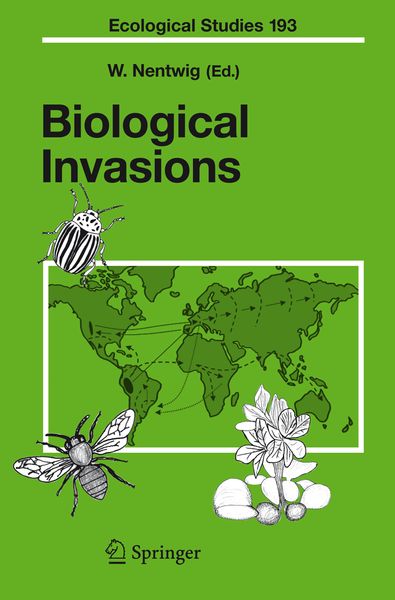
Produktbild: Biological Invasions
Band 193 - 12%

Biological Invasions

Aus der Reihe Ecological Studies
12% sparen

144,99 € UVP 164,99 €

inkl. gesetzl. MwSt., Versandkostenfrei


Beschreibung

Produktdetails

Einband

Gebundene Ausgabe

Erscheinungsdatum

13.11.2006

Herausgeber

Wolfgang Nentwig

Verlag

Springer Berlin

Seitenzahl

442

Maße (L/B/H)

24,3/16,5/3,2 cm

Gewicht

813 g

Auflage

1st ed. 2007

Sprache

Englisch

ISBN

978-3-540-36919-6

Beschreibung

Produktdetails

Einband

Gebundene Ausgabe

Erscheinungsdatum

13.11.2006

Herausgeber

Wolfgang Nentwig

Verlag

Springer Berlin

Seitenzahl

442

Maße (L/B/H)

24,3/16,5/3,2 cm

Gewicht

813 g

Auflage

1st ed. 2007

Sprache

Englisch

ISBN

978-3-540-36919-6

Herstelleradresse

Springer Nature Customer Service Center GmbH
Europaplatz 3
69115 Heidelberg
DE
ProductSafety@springernature.com

Noch keine Bewertungen vorhanden

Verfassen Sie die erste Bewertung zu diesem Artikel

Helfen Sie anderen Kundinnen und Kunden durch Ihre Meinung.

Kundinnen und Kunden meinen

Bewertungen (0)

Weitere Artikel finden Sie in

  • Produktbild: Biological Invasions
  • 1 Biological invasions: why it matters (Nentwig) First section: Pathways of biological invasions Short introduction (Nentwig) 2 Pathways in animal invasions (Nentwig) 3 Pathways in plant invasions (Kowarik, von der Lippe) 4 Is ballast water a major dispersal mechanism for marine organisms? (Gollasch) 5 Waterways as invasion highways – impact of climate change and globalization (Galil, Nehring, Panov) Second section: Traits of a good invader Short introduction (Nentwig) 6 Integrating ecological and evolutionary theory of biological invasions (Hufbauer, Torchin) 7 Traits associated with invasiveness in alien plants: Where do we stand? (Pysek, Richardson) 8 Do successful invaders exist? Pre-adaptations to novel environments in terrestrial vertebrates (Sol) Third section: Patterns of invasion and invasibility Short introduction (Nentwig) 9 Effects of land management practices on plant invasions in wildland areas (Brooks) 10 Nitrogen enrichment and plant invasions: the importance of nitrogen fixing plants and anthropogenic eutrophication (Scherer-Lorenzen, Olde Venterink, Buschmann) 11 From ecosystem invasibility to local, regional and global patterns of invasive species (Kühn, Klotz) 12 Will climate change promote alien plant invasions? (Thuiller, Richardson, Midgley) Fourth section: Ecological impact of biological invasions Short introduction (Nentwig) 13 Impacts of invasive species on ecosystem services (Charles, Dukes) 14 Biological invasions by marine jellyfish (Graham, Bayha) 15 Effects of invasive non-native species on the native biodiversity in the river Rhine (Baur, Schmidlin) 16 Hybridization and introgression between native and alien species (Largiadèr) 17 Genetically modified organisms as invasive species? (Hails,Timms-Wilson) Fifth section: Economy and socio-economy of biological invasions Short introduction (Nentwig) 18 Plant, animal, and microbes invasive species in the United States and World (Pimentel, Pimentel, Wilson) 19 Socio-economic impact and assessment of biological invasions (Binimelis, Born, Monterroso, Rodríguez-Labajos) Sixth section: Prevention and management of biological invasions Short introduction (Nentwig) 20 Economic analysis of invasive species policies (Touza, Dehnen-Schmutz, Jones) 21 Phytosanitary measures to prevent the introduction of invasive species (Hallman) 22 Limits and potentialities of eradication as a tool for addressing biological invasions (Genovesi) 23 Pros and cons of biological control (Babendreier) 24 General conclusion, or what has to be done now? (Nentwig)