Gutscheinbedingungen

**Gültig bis 06.07.2026 auf fremdsprachige Bücher online auf thalia.at, in der Thalia App ab einem Mindestbestellwert von 30€ und in allen Thalia Buchhandlungen in Österreich. In den Buchhandlungen nur gültig auf lagernde Ware. Einzelne Artikel können ausgeschlossen sein. Ausgenommen sind preisgebundene Artikel & eBooks. Pro Einkauf einmal einlösbar. Nur gültig gegen Vorlage oder im Onlineshop hinterlegter Bonuscard. Infos zur Einlösung in der Buchhandlung sind auf der Bonuscard-Vorteilspreisseite zu finden. Click & Collect nur bei Onlinevorabzahlung möglich. Keine Einlösung bei Scan & Go-Bezahlung. Keine Barauszahlung. Nicht kombinierbar mit anderen Aktionen und Gutscheinen. Gutschein wird auf max. 500€ Bestellwert angerechnet. Nicht gültig für Versandkosten und Services.

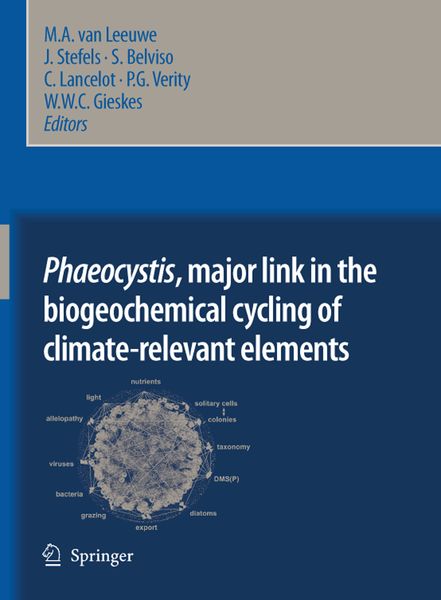
Produktbild: Phaeocystis, major link in the biogeochemical cycling of climate-relevant elements
- 11%

Phaeocystis, major link in the biogeochemical cycling of climate-relevant elements

11% sparen

96,99 € UVP 109,99 €

inkl. gesetzl. MwSt., Versandkostenfrei


Beschreibung

Produktdetails

Einband

Gebundene Ausgabe

Erscheinungsdatum

03.07.2007

Herausgeber

van Leeuwe + weitere

Verlag

Springer Netherland

Seitenzahl

330

Maße (L/B/H)

26/18,3/2,6 cm

Gewicht

964 g

Auflage

2007

Sprache

Englisch

ISBN

978-1-4020-6213-1

Beschreibung

Produktdetails

Einband

Gebundene Ausgabe

Erscheinungsdatum

03.07.2007

Herausgeber

Verlag

Springer Netherland

Seitenzahl

330

Maße (L/B/H)

26/18,3/2,6 cm

Gewicht

964 g

Auflage

2007

Sprache

Englisch

ISBN

978-1-4020-6213-1

Herstelleradresse

Springer-Verlag KG
Sachsenplatz 4-6
1201 Wien
AT

Email: GPSR Kontakt

Noch keine Bewertungen vorhanden

Verfassen Sie die erste Bewertung zu diesem Artikel

Helfen Sie anderen Kundinnen und Kunden durch Ihre Meinung.

Kundinnen und Kunden meinen

Bewertungen (0)

  • Produktbild: Phaeocystis, major link in the biogeochemical cycling of climate-relevant elements
  • A taxonomic review of the genus Phaeocystis.- Methods used to reveal genetic diversity in the colony-forming prymnesiophytes Phaeocystis antarctica, P. globosa and P. pouchetii—preliminary results.- The life cycle of Phaeocystis: state of knowledge and presumptive role in ecology.- Phaeocystis colony distribution in the North Atlantic Ocean since 1948, and interpretation of long-term changes in the Phaeocystis hotspot in the North Sea.- Photosynthetic responses in Phaeocystis antarctica towards varying light and iron conditions.- Effects of iron concentration on pigment composition in Phaeocystis antarctica grown at low irradiance.- Evidence for high iron requirements of colonial Phaeocystis antarctica at low irradiance.- The carbohydrates of Phaeocystis and their degradation in the microbial food web.- The role of iron in the bacterial degradation of organic matter derived from Phaeocystis antarctica.- The colonization of two Phaeocystis species (Prymnesiophyceae) by pennate diatoms and other protists: a significant contribution to colony biomass.- Zooplankton grazing on Phaeocystis: a quantitative review and future challenges.- The influence of Phaeocystis globosa on microscale spatial patterns of chlorophyll a and bulk-phase seawater viscosity.- Haemolytic activity of live Phaeocystis pouchetii during mesocosm blooms.- Phaeocystis and its interaction with viruses.- Does Phaeocystis spp. contribute significantly to vertical export of organic carbon?.- Vernal sedimentation trends in north Norwegian fjords: temporary anomaly in 234Th particulate fluxes related to Phaeocystis pouchetii proliferation.- Environmental constraints on the production and removal of the climatically active gas dimethylsulphide (DMS) and implications for ecosystem modelling.- Variability in abundance and fluxes of dimethyl sulphide in the Indian Ocean.- Gaining integrated understanding of Phaeocystis spp. (Prymnesiophyceae) through model-driven laboratory and mesocosm studies.- Current understanding of Phaeocystis ecology and biogeochemistry, and perspectives for future research.