Gutscheinbedingungen

**Gültig bis 06.07.2026 auf fremdsprachige Bücher online auf thalia.at, in der Thalia App ab einem Mindestbestellwert von 30€ und in allen Thalia Buchhandlungen in Österreich. In den Buchhandlungen nur gültig auf lagernde Ware. Einzelne Artikel können ausgeschlossen sein. Ausgenommen sind preisgebundene Artikel & eBooks. Pro Einkauf einmal einlösbar. Nur gültig gegen Vorlage oder im Onlineshop hinterlegter Bonuscard. Infos zur Einlösung in der Buchhandlung sind auf der Bonuscard-Vorteilspreisseite zu finden. Click & Collect nur bei Onlinevorabzahlung möglich. Keine Einlösung bei Scan & Go-Bezahlung. Keine Barauszahlung. Nicht kombinierbar mit anderen Aktionen und Gutscheinen. Gutschein wird auf max. 500€ Bestellwert angerechnet. Nicht gültig für Versandkosten und Services.

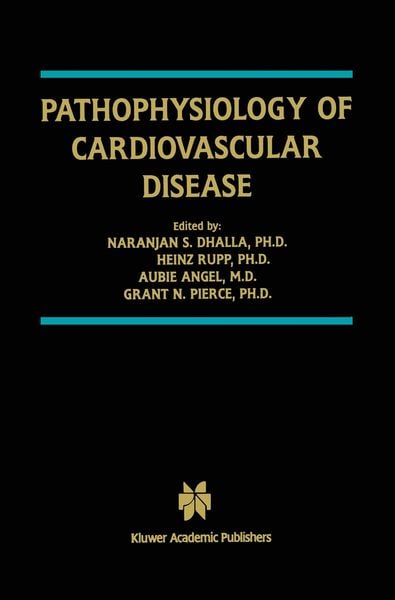
  • Produktbild: Pathophysiology of Cardiovascular Disease
  • Produktbild: Pathophysiology of Cardiovascular Disease
Band 10 - 12%

Pathophysiology of Cardiovascular Disease

12% sparen

144,99 € UVP 164,99 €

inkl. gesetzl. MwSt., Versandkostenfrei


Beschreibung

Produktdetails

Einband

Gebundene Ausgabe

Erscheinungsdatum

30.11.2003

Herausgeber

Naranjan S. Dhalla + weitere

Verlag

Springer Us

Seitenzahl

648

Maße (L/B/H)

24,1/16/4,6 cm

Gewicht

1280 g

Auflage

2004

Sprache

Englisch

ISBN

978-1-4020-7452-3

Beschreibung

Produktdetails

Einband

Gebundene Ausgabe

Erscheinungsdatum

30.11.2003

Herausgeber

Verlag

Springer Us

Seitenzahl

648

Maße (L/B/H)

24,1/16/4,6 cm

Gewicht

1280 g

Auflage

2004

Sprache

Englisch

ISBN

978-1-4020-7452-3

Herstelleradresse

Springer-Verlag KG
Sachsenplatz 4-6
1201 Wien
AT

Email: GPSR Kontakt

Noch keine Bewertungen vorhanden

Verfassen Sie die erste Bewertung zu diesem Artikel

Helfen Sie anderen Kundinnen und Kunden durch Ihre Meinung.

Kundinnen und Kunden meinen

Bewertungen (0)

  • Produktbild: Pathophysiology of Cardiovascular Disease
  • Produktbild: Pathophysiology of Cardiovascular Disease
  • 1. Septic Cardiomyopathy.- 2. Mitochondrial Function—A Limiting Factor in Heart Failure?.- 3. Myosin Heavy Chain Isoforms Modulate Motor Function of Cardiac Myosin by Changing Crossbridge Kinetics.- 4. Role of Reactive Oxygen Species in the Regulation of Cardiac Myocyte Phenotype.- 5. Functional Significance of Ryanodine Receptor-Mediated Calcium Leaks in Sarcoplasmic Reticulum Membranes.- 6. Cell-Cell and Cell-Extracellular Matrix Interactions in Cardiomyopathy.- 7. Role of the Phosphoinositide 3-Kinase Pathway in Cardiac Hypertrophy.- 8. Role of Ras/GTPase and Calcium/Calmodulin-dependent Protein Kinase II in the Signal Transduction Mechanisms Involved in Hyperthermic Preconditioning.- 9. Interactions of the Cyclic AMP and Nitric Oxide Pathways in Cardiac Fibroblasts.- 10. Do Humoral and Mechanical Stimulation of Cardiomyocytes Share Common Transduction Pathways?.- 11. Differential Inhibition by the Phosphatase Inhibitor Cantharidin of the Antiadrenergic Effect of Endothelin-1 and Carbachol in the Canine Ventricular Myocardium.- 12. Factors Involved in Self and Drug-Induced Spontaneous Ventricular Defibrillation: Intra and Inter Species Variations.- 13. Cardiac ATP-Sensitive Potassium Channel: A Bi-Functional Channel/Enzyme Multimer.- 14. Measurement of Cytosolic pH Simultaneously with Isometric Tension in Canine Trabeculae.- 15. Redox Regulation of Ischemic Heart Disease.- 16. Cell Biology of Acute Reperfusion Injury.- 17. Reactive Oxygen Species, Na+/H+ Exchange and Ca2+ Overload During Myocardial Ischemia/Reperfusion Injury: The Paradox Explained?.- 18. Calcium Signalling During Acute Myocardial Ischemia: New Insights from Optical Mapping Techniques.- 19. Effects of Ischemia on Cardiomyocyte Connexin-43 Distribution and Phosphorylation Studied in in vivo and invitro Models.- 20. Temperature Dependence of Ischemic Preconditioning.- 21. Mechanism of Cardioprotective Effect of Remote Aortic Preconditioning.- 22. Inhibition of Degranulation of Resident Cardiac Mast Cells May Prevent Ischaemia and Reperfusion-Induced Myocardial Injury.- 23. Mechanisms of Cardioprotection against Ischemia Reperfusion Injury.- 24. Modulation of Arachidonic Acid Metabolism by Phorbol 12-Myristate 13-Acetate in Monocytes and Myocytes.- 25. Endothelium-Derived Hyperpolarizing Factor(s). Does it exist and What Role Does it Play in the Regulation of Blood Flow?.- 26. Cytokinesis in Smooth Muscle.- 27. ADP-Ribosylation and the Cardiovascular System.- 28. Influence of the Myocardium Contractile State in the Coronary Venous Flow Deviation Phenomenon.- 29. Natriuretic Peptides and Endothelin in Aortic Stenosis and Heart Transplantation.- 30. Activation of Mitogen-Activated Protein Kinases and Protein Kinase B/Akt Signaling by Oxidative Stress in Vascular Smooth Muscle Cells: Involvement in Vascular Pathophysiology.- 31. Preconditioning and Myocardial Angiogenesis.- 32. The Arachidonic Acid Cascade: Thromboxane A2 Antagonism and Synthetase Inhibition in Experimental Myocardial Infarction.- 33. Receptors and Channels of Nuclear Envelope Membranes as a New Target for Drug Action.- 34. SMAD Cofactors/Corepressors in the Fibrosed Post-MI Heart: Possible Therapeutic Targets.- 35. Phytoestrogens and Cardiovascular Disorders.- 36. Non-Conventional Long-Lasting Cardioprotection Induced by Chronic Exposure to Ambient Heat.- 37. Fetal and Neonatal Cardiomyocyte Transplantation for the Treatment of Myocardial Infarction.- 38. Cellular Cardiomyoplasty: The Role of Bone Marrow Stromal Cells in Myocardial Tissue Regeneration.- 39. Xenotransplantation: An Overview.- 40. Assessment of Myocardial Injury Using Magnetic Resonance Imaging.- 41. Magnetic Resonance in the Assessment and Development of Surgical Strategies for Protecting the Brain during Cardiovascular Surgery.- 42. Heart Failure Recovery with Mechanical Circulatory Support.