KI-Beratung Beta

Gutscheinbedingungen

**Gültig bis 11.11.2026 auf Spielzeug, Schreibwaren, Filme, Geschenke & Trends, Musik, tolino eReader & Zubehör, Hörbücher und Hörbuch-Downloads, nicht preisgebundene Bücher und Kalender online auf thalia.at und in der Thalia App. Einzelne Artikel können ausgeschlossen sein. Aufgrund der Buchpreisbindung sind deutschsprachige Bücher und eBooks ausgenommen. Zusätzlich ausgenommen sind Abos & Flatrates, Games, Geschenkkarten/-boxen, Shelfies, Software, Zeitschriften sowie einzelne Artikel von tonies®. Pro Einkauf einmal einlösbar. Click & Collect nur bei Onlinevorabzahlung möglich. Keine Barauszahlung. Nicht kombinierbar mit anderen Aktionen und Gutscheinen. Gutschein wird auf max. 500€ Bestellwert angerechnet. Nicht gültig für Versandkosten und Services.

  • Produktbild: Automating Systems Development
  • Produktbild: Automating Systems Development

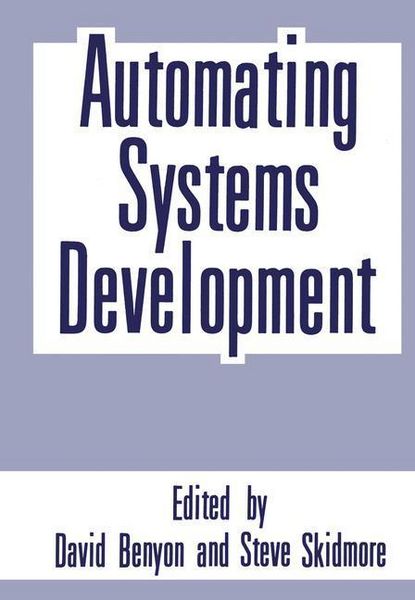
Automating Systems Development

117,99 €

inkl. gesetzl. MwSt., Versandkostenfrei


Beschreibung

Produktdetails

Einband

Gebundene Ausgabe

Erscheinungsdatum

01.08.1988

Abbildungen

516 p.

Herausgeber

David R. Benyon + weitere

Verlag

Springer Us

Seitenzahl

516

Gewicht

1104 g

Auflage

1988

Sprache

Englisch

ISBN

978-0-306-42931-6

Beschreibung

Produktdetails

Einband

Gebundene Ausgabe

Erscheinungsdatum

01.08.1988

Abbildungen

516 p.

Herausgeber

Verlag

Springer Us

Seitenzahl

516

Gewicht

1104 g

Auflage

1988

Sprache

Englisch

ISBN

978-0-306-42931-6

Herstelleradresse

Libri GmbH
Europaallee 1
36244 Bad Hersfeld
DE

Email: gpsr@libri.de

Noch keine Bewertungen vorhanden

Verfassen Sie die erste Bewertung zu diesem Artikel

Helfen Sie anderen Kundinnen und Kunden durch Ihre Meinung.

Kundinnen und Kunden meinen

Bewertungen (0)

  • Produktbild: Automating Systems Development
  • Produktbild: Automating Systems Development
  • Section 1 — Fourth Generation Languages.- Toolbox Design Philosophy.- The Impact of Fourth Generation Tools in Practice — Three Case Histories.- A Case History of the Development and Implementation of a System Using MIMER and Prototyping.- Flexible Design of Manufacturing Information Systems.- 4GL Productivity Through Information Engineering.- DB4GL — An Intelligent Database System.- Section 2 — Work Bench Tools.- Can Fact—Finding Be Automated?.- Accelerating the Analysis/Design Transition with the Transform Analyser.- Implementing Relational Data Bases: Automating the Mapping Process.- PLEX — A Structured Line Diagram Editor.- MAJIC — Automating JSP Program Design and Development.- Computer — Aided Design of Software: Research and Experience.- Section 3 — Work Bench Tools Within a Methodology.- Automating a Systems Development Methodology: The LBMS Experience.- Tetrarch — A System Development Methodology with Automated Tools.- Intellipse: A Knowledge Based Tool for an Intergrated Project Support Environment.- Methodologies and Tools for Real—Time Systems.- Making Structured Methods Work: Using an Embedded Expert System to Monitor the Use of Methodology in an Analyst’s Workbench — The Information Engineering Workbench.- Automating Information Engineering.- Introducing Workbench Tools into a Development Environment.- Section 4 — Open Tools.- IPSEs in Support of Teams.- Perspective Kernel — The Basis for a General Purpose IPSE.- Fortune — An IPSE Documentation Tool.- An Investigation into A Systems Development Technique.- A View Mechanism for An Integrated Project Support Environment.- Using Databases to Automate System Development.- Knuth with Knobs on — Literate Program Development.- Section 5 — Environments And Approaches: Other Issues.- Data Data Dictionaries.- The Role of the Corporate Dictionary.- Entity Modeling and Intelligent Dictionaries.- Automated Support Using a Data Mainframe Data Dictionary for Analysis and Data Modelling at a Major International Bank.- Application Environments.- An Application Environment.- High Level Design for Office Automation with Supporting Graphics Facilities.- Are There Non Real—Time Systems?.- The Use of Frame—Based Knowledge Representation Techniques in Prototyping.- Section 6 — Future Trends.- Time to Change the Culture of Information Systems Departments.- The Rubic Project: A New Paradgm for Information Systems Development.- Designing a Method Driven Software Development Environment.- An Environment Definition Model for Meta System Support.- Specifying Procedures to Office Systems.