KI-Beratung Beta

Gutscheinbedingungen

**Gültig am 20.11.2026 ab einem Mindestbestellwert von 30€ auf Spielzeug, Schreibwaren, Filme, Geschenke & Trends, Musik, tolino eReader & Zubehör, Hörbücher und Hörbuch-Downloads, nicht preisgebundene Bücher und Kalender online auf thalia.at und in der Thalia App. Einzelne Artikel können ausgeschlossen sein. Aufgrund der Buchpreisbindung sind deutschsprachige Bücher und eBooks ausgenommen. Zusätzlich ausgenommen sind Abos & Flatrates, Games, Geschenkkarten/-boxen, Shelfies, Software, Zeitschriften sowie einzelne Artikel von tonies®. Pro Einkauf einmal einlösbar. Click & Collect nur bei Onlinevorabzahlung möglich. Keine Barauszahlung. Nicht kombinierbar mit anderen Aktionen und Gutscheinen. Gutschein wird auf max. 500€ Bestellwert angerechnet. Nicht gültig für Versandkosten und Services. Preisgebundene Artikel sind vom Mindestbestellwert ausgeschlossen.

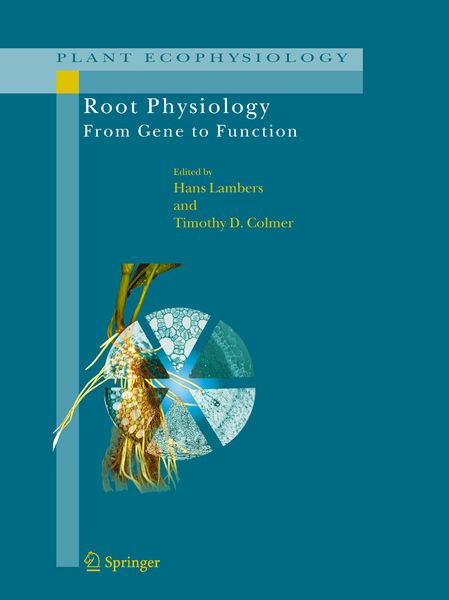
Produktbild: Root Physiology: from Gene to Function
Band 4

Root Physiology: from Gene to Function

Aus der Reihe Plant Ecophysiology

164,99 €

inkl. gesetzl. MwSt., Versandkostenfrei


Beschreibung

In the last decade, enormous progress has been made on the physiology of plant roots, including on a wide range of molecular aspects. Much of that progress has been captured in the chapters of this book. Breakthroughs have been made possible through integration of molecular and whole-plant aspects. The...

Beschreibung

In the last decade, enormous progress has been made on the physiology of plant roots, including on a wide range of molecular aspects. Much of that progress has been captured in the chapters of this book. Breakthroughs have been made possible through integration of molecular and whole-plant aspects. The classical boundaries between physiology, biochemistry and molecular biology have vanished. There has been a strong focus on a limited number of model species, including Arabidopsis thaliana. That focus has allowed greater insight into the significance of specific genes for plant development and functioning. However, many species are very different from A. thaliana, in that they are mycorrhizal, develop a symbiosis with N2-fixing microsymbionts, or have other specialised root structures. Also, some have a much greater capacity to resist extreme environments, such as soil acidity, salinity, flooding or heavy-metal toxicities, due to specific adaptations. Research on species other than A. thaliana is therefore pivotal, to develop new knowledge in plant sciences in a comprehensive manner. This fundamental new knowledge can be the basis for important applications in, e.g., agriculture and plant conservation. Although significant progress has been made, much remains to be learnt. It is envisaged that discoveries made in the recent past will likely lead to major breakthroughs in the next decade.

Produktdetails

Einband

Gebundene Ausgabe

Erscheinungsdatum

28.11.2005

Abbildungen

XVI, 270 p.

Herausgeber Hans Lambers + weitere

Produktdetails

Einband

Gebundene Ausgabe

Erscheinungsdatum

28.11.2005

Abbildungen

XVI, 270 p.

Herausgeber
Verlag Springer Netherland
Seitenzahl

270

Maße (L/B/H)

26/18,3/2,3 cm

Gewicht

745 g

Auflage

2005

Sprache

Englisch

ISBN

978-1-4020-4098-6

Herstelleradresse

Springer-Verlag GmbH
Europaplatz 3
69115 Heidelberg
DE

Email: ProductSafety@springernature.com

Noch keine Bewertungen vorhanden

Verfassen Sie die erste Bewertung zu diesem Artikel

Helfen Sie anderen Kundinnen und Kunden durch Ihre Meinung.

Kundinnen und Kunden meinen

Bewertungen (0)

  • Produktbild: Root Physiology: from Gene to Function
  • Root nitrogen acquisition and assimilation.- Phosphate acquisition.- Root-based N2-fixing symbioses: Legumes, actinorhizal plants, Parasponia sp. and cycads.- Mycorrhizas: Gene to function.- Cluster roots: A curiosity in context.- The roots of carnivorous plants.- Roles of aquaporins in root responses to irrigation.- Mechanisms of plant resistance to metal and metalloid ions and potential biotechnological applications.- The physiology, genetics and molecular biology of plant aluminum resistance and toxicity.- Acclimation to soil flooding — sensing and signal-transduction.- Root defense responses to fungal pathogens: A molecular perspective.- Soil microorganisms: An important determinant of allelopathic activity.- Facilitative root interactions in intercrops.- Root-to-shoot signalling: Assessing the roles of ‘up’ in the up and down world of long-distance signalling in planta.