Gutscheinbedingungen

**Gültig bis 06.07.2026 auf fremdsprachige Bücher online auf thalia.at, in der Thalia App ab einem Mindestbestellwert von 30€ und in allen Thalia Buchhandlungen in Österreich. In den Buchhandlungen nur gültig auf lagernde Ware. Einzelne Artikel können ausgeschlossen sein. Ausgenommen sind preisgebundene Artikel & eBooks. Pro Einkauf einmal einlösbar. Nur gültig gegen Vorlage oder im Onlineshop hinterlegter Bonuscard. Infos zur Einlösung in der Buchhandlung sind auf der Bonuscard-Vorteilspreisseite zu finden. Click & Collect nur bei Onlinevorabzahlung möglich. Keine Einlösung bei Scan & Go-Bezahlung. Keine Barauszahlung. Nicht kombinierbar mit anderen Aktionen und Gutscheinen. Gutschein wird auf max. 500€ Bestellwert angerechnet. Nicht gültig für Versandkosten und Services.

  • Produktbild: Allelopathy
  • Produktbild: Allelopathy
- 13%

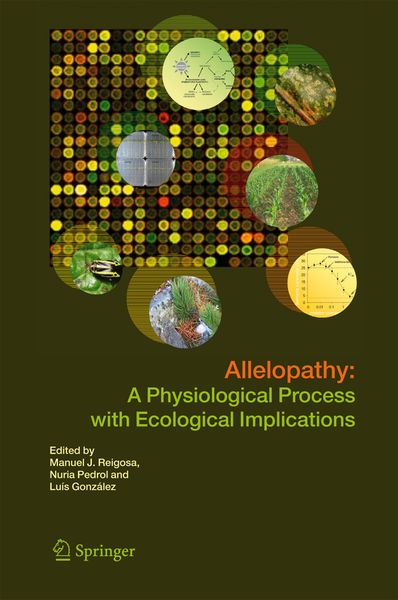
Allelopathy A Physiological Process with Ecological Implications

13% sparen

189,99 € UVP 219,99 €

inkl. gesetzl. MwSt., Versandkostenfrei


Beschreibung

Produktdetails

Einband

Gebundene Ausgabe

Erscheinungsdatum

13.12.2005

Herausgeber

Manuel J. Reigosa + weitere

Verlag

Springer Netherland

Seitenzahl

638

Maße (L/B/H)

24,3/16,6/4,3 cm

Gewicht

1131 g

Auflage

2006 edition

Sprache

Englisch

ISBN

978-1-4020-4279-9

Beschreibung

Produktdetails

Einband

Gebundene Ausgabe

Erscheinungsdatum

13.12.2005

Herausgeber

Verlag

Springer Netherland

Seitenzahl

638

Maße (L/B/H)

24,3/16,6/4,3 cm

Gewicht

1131 g

Auflage

2006 edition

Sprache

Englisch

ISBN

978-1-4020-4279-9

Herstelleradresse

Libri GmbH
Europaallee 1
36244 Bad Hersfeld
DE

Email: gpsr@libri.de

Noch keine Bewertungen vorhanden

Verfassen Sie die erste Bewertung zu diesem Artikel

Helfen Sie anderen Kundinnen und Kunden durch Ihre Meinung.

Kundinnen und Kunden meinen

Bewertungen (0)

  • Produktbild: Allelopathy
  • Produktbild: Allelopathy
  • Preface.- List of contributors.- 1. Introduction to allelopathy; Chou,C-H.- 2. Basic pathways for the origin of allelopathic compounds; Seigler, D.S.- Methodological aspects. 3. Clues in the search of new herbicides; Dayan, F.E., Duke, S.O.- 4. Distinguishing allelopathy from resource competition: the role of density; Weidenhamer, J.D.- 5. Toxicity in allelopathy: in silico approach; Lo Piparo, E. et al.- Physiological aspects of allelopathy. 6. Allelochemicals and photosynthesis; Zhou, Y.H., Yu, J.Q.- 7. Cell cycle analyses for understanding growth inhibition; Sánchez-Moreiras, A.M. et al. 8. Detoxification of allelochemicals. The case of bezoxazolin-2(3H)-one (BOA); Schulz, M. et al.- 9. Allelopathy and abiotic stress; Pedrol, M.N. et al.- 10. Allelopathy and biotic stresses; Gawronska, H., Golisz, A.- 11. Plant secondary metabolites. Targets and mechanisms of allelopathy; Lotina-Hennsen, B. et al.- 12. Mitochondria as a site of allelochemical action; Ishii-Iwamoto, E.L. et al.- Ecophysiology and allelopathy. 13. Weed germination, seedling growth and their lesson for allelopathy in agriculture; Aliotta, A. et al.- 14. Allelopathy: A soil system perspective; Blum, U.- 15. Microorganisms and allelopathy: A one-sided approach; Vokou, D. et al.- Ecological aspects of allelopathy. 16. Ecological relationships and allelopathy; Sinkkonen, A.- 17. Resistance and susceptibility of plant communities to invasion:revisiting rabotnov’s ideas about community homeostasis; Callaway, R.M., Hierro, J.L.- Allelopathy in different environments. 18. Allelopathy in marine ecosystems; Granéli, E., Pavia, H.- 19. Allelopathy in aquatic environments; Erhard, D.- 20. Forest ecosystems and allelopathy; Reigosa, M.J., González, L.- 21. Allelopathic interactions in agroecosystems; Kohli, R.K. et al.- Applied aspects of allelopathy. 22. Playing with chemistry: studies on Orobanche spp. germination stimulants; Macías, F.A. et al.- 23. Modes of action of phytotoxins from plants; Duke, S.O., Dayan, F.E.- 24. Allelopathy in ecological sustainable agriculture; Narwal, S.S.- 25. Parasitic weeds and allelopathy: from the hypothesis to the proof; Qasem, J.R.-