KI-Beratung Beta

  • Produktbild: Tracking Environmental Change Using Lake Sediments
  • Produktbild: Tracking Environmental Change Using Lake Sediments
Band 4 - 12%

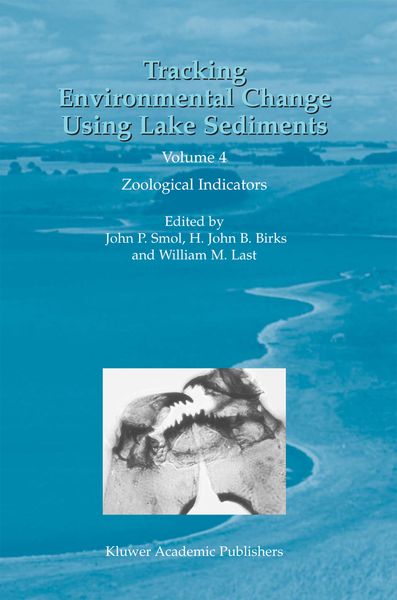
Tracking Environmental Change Using Lake Sediments Volume 4: Zoological Indicators

12% sparen

144,99 € UVP 164,99 €

inkl. gesetzl. MwSt., Versandkostenfrei


Beschreibung

Paleolimnology is a rapidly developing science that is now being used to study a suite of environmental and ecological problems. This volume is the fourth handbook in the Developments in Paleoenvironmental Research book series. The first volume (Last & Smol, 2001a) examined the acquisition and archiving...

Beschreibung

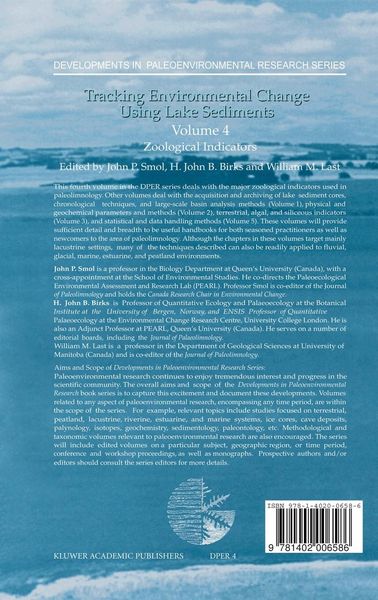
Paleolimnology is a rapidly developing science that is now being used to study a suite of environmental and ecological problems. This volume is the fourth handbook in the Developments in Paleoenvironmental Research book series. The first volume (Last & Smol, 2001a) examined the acquisition and archiving of sediment cores, chronological techniques, and large-scale basin analysis methods. Volume 2 (Last & Smol, 2001b) focused on physical and chemical methods. Volume 3 (Smol et al. , 2001), along with this book, summarize the many biological methods and techniques that are available to study long-term environmental changeusing information preserved in sedimentary profiles. A subsequent volume (Birks et al. , in preparation) will deal with statistical and data handling procedures. It is our intent that these books will provide sufficient detail and breadth to be useful handbooks for both seasoned practitioners as well as newcomers to the area of paleolimnology. These books will also hopefully be useful to non-paleolimnologists (e. g. , limnologists, archeologists, palynologists, geographers, geologists, etc. ) who continue to hear and read about pal- limnology, but have little chance to explore the vast and sometimes difficult to access journal-based reference material for this rapidly expanding field. Although the chapters in these volumes target mainly lacustrine settings, many of the techniques described can also be readily applied to fluvial, glacial, marine, estuarine, and peatland environments. This current volume focuses on zoological indicators preserved in lake sediments, whilst Volume 3 focused on terrestrial, algal, and siliceous indicators.

Rezension

"This book is an excellent compendium of modern uses and techniques of various zoological indicators (other than protozoa, rotifers and sponges). The editors have done a superb job in keeping the chapters broadly focused and aimed at the introductory level, making the content of this volume accessible to other specialist and non-specialist alike from a variety of disciplines."
(Lisa E. Park, Dept. of Geology, University of Akron, OH, USA
in
Journal of Paleolimnology, 30:4)

Produktdetails

Einband

Gebundene Ausgabe

Erscheinungsdatum

30.06.2002

Abbildungen

XXII, 218 p.

Herausgeber John P. Smol + weitere

Produktdetails

Einband

Gebundene Ausgabe

Erscheinungsdatum

30.06.2002

Abbildungen

XXII, 218 p.

Herausgeber
Verlag Springer Netherland
Seitenzahl

218

Maße (L/B/H)

24/16,1/1,9 cm

Gewicht

484 g

Auflage

2001

Sprache

Englisch

ISBN

978-1-4020-0658-6

Herstelleradresse

Springer-Verlag GmbH
Europaplatz 3
69115 Heidelberg
DE

Email: ProductSafety@springernature.com

Noch keine Bewertungen vorhanden

Verfassen Sie die erste Bewertung zu diesem Artikel

Helfen Sie anderen Kundinnen und Kunden durch Ihre Meinung.

Kundinnen und Kunden meinen

Bewertungen (0)

  • Produktbild: Tracking Environmental Change Using Lake Sediments
  • Produktbild: Tracking Environmental Change Using Lake Sediments
  • Zoological Indicators in Lake Sediments: An Introduction.- Cladocera and Other Branchiopod Crustaceans.- Midges: Chironomidae and Related Diptera.- Coleoptera and Trichoptera.- Oribatid Mites.- Bryozoan Statoblasts.- Ostracoda.- Freshwater Molluscs.- Fish.