Gutscheinbedingungen

**Gültig nur für Bestellungen an die Wunsch-Poststation bis 10.06.2026 auf Spielzeug, Schreibwaren, Filme, Geschenke & Trends, Musik, tolino eReader & Zubehör, Hörbücher und Hörbuch-Downloads (außer Abo), nicht preisgebundene Bücher und Kalender online auf thalia.at und in der Thalia App. Einzelne Artikel können ausgeschlossen sein. Aufgrund der Buchpreisbindung sind deutschsprachige Bücher und eBooks ausgenommen. Zusätzlich ausgenommen sind preisgebundene Artikel, Abos & Flatrates, eBooks, Games, Geschenkkarten/-boxen, Shelfies, Software, Zeitschriften sowie einzelne Artikel von tonies®. Pro Einkauf einmal einlösbar. Kein Click & Collect möglich. Keine Barauszahlung. Nicht kombinierbar mit anderen Aktionen und Gutscheinen. Gutschein wird auf max. 500€ Bestellwert angerechnet. Nicht gültig für Versandkosten und Services.

  • Produktbild: Name Reactions
  • Produktbild: Name Reactions

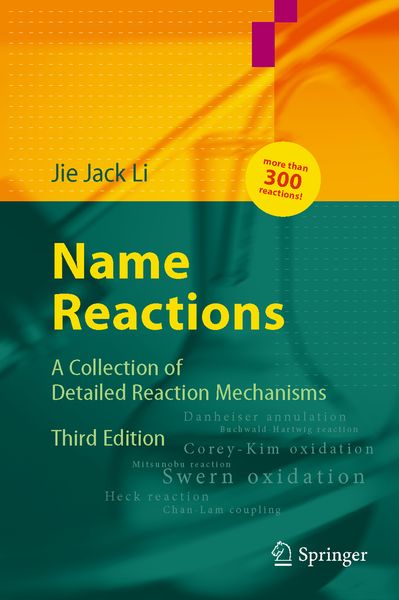
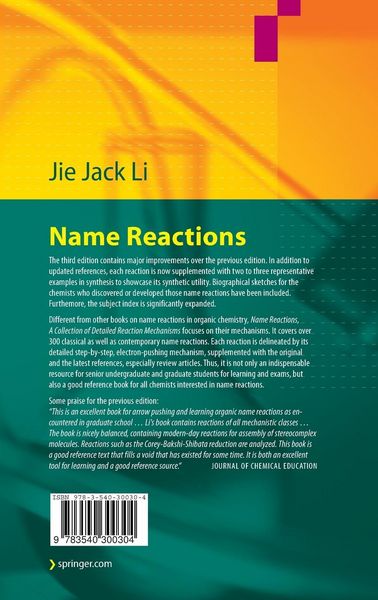
Name Reactions A Collection of Detailed Mechanisms and Synthetic Applications

51,99 €

inkl. gesetzl. MwSt., Versandkostenfrei


Beschreibung

Produktdetails

Einband

Gebundene Ausgabe

Erscheinungsdatum

19.07.2006

Verlag

Springer Berlin

Seitenzahl

653

Maße (L/B/H)

24,1/16/4,2 cm

Gewicht

1172 g

Auflage

3. Auflage

Sprache

Englisch

ISBN

978-3-540-30030-4

Beschreibung

Produktdetails

Einband

Gebundene Ausgabe

Erscheinungsdatum

19.07.2006

Verlag

Springer Berlin

Seitenzahl

653

Maße (L/B/H)

24,1/16/4,2 cm

Gewicht

1172 g

Auflage

3. Auflage

Sprache

Englisch

ISBN

978-3-540-30030-4

Herstelleradresse

Springer Nature Customer Service Center GmbH
Europaplatz 3
69115 Heidelberg
DE
ProductSafety@springernature.com

Kundinnen und Kunden meinen

0 Bewertungen

Informationen zu Bewertungen

Zur Abgabe einer Bewertung ist eine Anmeldung im Konto notwendig. Die Authentizität der Bewertungen wird von uns nicht überprüft. Wir behalten uns vor, Bewertungstexte, die unseren Richtlinien widersprechen, entsprechend zu kürzen oder zu löschen.

Die Bewertungen sind nach Format, Anzahl Sterne und Datum sortiert.

Verfassen Sie die erste Bewertung zu diesem Artikel

Helfen Sie anderen Kund*innen durch Ihre Meinung

Kundinnen und Kunden meinen

0 Bewertungen filtern

  • Produktbild: Name Reactions
  • Produktbild: Name Reactions
  • Alder ene reaction.- Aldol condensation.- Algar-Flynn-Oyamada Reaction.- Allan-Robinson reaction.- Appel reaction.- Arndt-Eistert homologation.- Baeyer-Villiger oxidation.- Baker-Venkataraman rearrangement.- Bamberger rearrangement.- Bamford-Stevens reaction.- Barbier coupling reaction.- Bargellini reaction.- Bartoli indole synthesis.- Barton radical decarboxylation.- Barton-McCombie deoxygenation.- Barton nitrite photolysis.- Barton-Zard reaction.- Batcho-Leimgruber indole synthesis.- Baylis-Hillman reaction.- Beckmann rearrangement.- Beirut reaction.- Benzilic acid rearrangement.- Benzoin condensation.- Bergman cyclization.- Biginelli pyrimidone synthesis.- Birch reduction.- Bischler-Möhlau indole synthesis.- Bischler-Napieralski reaction.- Blaise reaction.- Blanc chloromethylation.- Blum aziridine synthesis.- Boekelheide reaction.- Boger pyridine synthesis.- Borch reductive amination.- Borsche-Drechsel cyclization.- Boulton-Katritzky rearrangement.- Bouveault aldehyde synthesis.- Bouveault-Blanc reduction.- Boyland-Sims oxidation.- Bradsher reaction.- Brook rearrangement.- Brown hydroboration.- Bucherer carbazole synthesis.- Bucherer reaction.- Bucherer-Bergs reaction.- Büchner-Curtius-Schlotterbeck reaction.- Büchner method of ring expansion.- Buchwald-Hartwig C-N and C-O bond formation reactions.- Burgess dehydrating reagent.- Cadiot-Chodkiewicz coupling.- Camps quinolinol synthesis.- Cannizzaro disproportionation.- Carroll rearrangement.- Castro-Stephens coupling.- Chan alkyne reduction.- Chan-Lam coupling reaction.- Chapman rearrangement.- Chichibabin pyridine synthesis.- Chugaev elimination.- Ciamician-Dennsted rearrangement.- Claisen condensation.- Claisen isoxazole synthesis.- Claisen rearrangements.- Clemmensen reduction.- Combes quinoline synthesis.- Conrad-Limpach reaction.- Cope elimination reaction.- Cope rearrangement.- Corey-Bakshi-Shibata (CBS) reduction.- Corey-Chaykovsky reaction.- Corey-Fuchs reaction.- Corey-Kim oxidation.- Corey-Nicolaou macrolactonization.- Corey-Seebach reaction.- Corey-Winter olefin synthesis.- Criegee glycol cleavage.- Criegee mechanism of ozonolysis.- Curtius rearrangement.- Dakin oxidation.- Dakin-West reaction.- Danheiser annulation.- Darzens glycidic ester condensation.- Davis chiral oxaziridine reagents.- Delépine amine synthesis.- de Mayo reaction.- Demjanov rearrangement.- Dess-Martin periodinane oxidation.- Dieckmann condensation.- Diels-Alder reaction.- Dienone-phenol rearrangement.- Di-?-methane rearrangement.- Doebner quinoline synthesis.- Dötz reaction.- Dowd-Beckwith ring expansion.- Erlenmeyer-Plöchl azlactone synthesis.- Eschenmoser-Tanabe fragmentation.- Eschweiler-Clarke reductive alkylation of amines.- Evans aldol reaction.- Favorskii rearrangement and quasi-Favorskii rearrangement.- Feist-Bénary furan synthesis.- Ferrier carbocyclization.- Ferrier glycal allylic rearrangement.- Fiesselmann thiophene synthesis.- Fischer indole synthesis.- Fischer oxazole synthesis.- Fleming-Kumada oxidation.- Friedel-Crafts reaction.- Friedländer quinoline synthesis.- Fries rearrangement.- Fukuyama amine synthesis.- Fukuyama reduction.- Gabriel synthesis.- Gabriel-Colman rearrangement.- Gassman indole synthesis.- Gattermann-Koch reaction.- Gewald aminothiophene synthesis.- Glaser coupling.- Gomberg-Bachmann reaction.- Gould-Jacobs reaction.- Grignard reaction.- Grob fragmentation.- Guareschi-Thorpe condensation.- Hajos-Wiechert reaction.- Haller-Bauer reaction.- Hantzsch dihydropyridine synthesis.- Hantzsch pyrrole synthesis.- Heck reaction.- Hegedus indole synthesis.- Hell-Volhard-Zelinsky reaction.- Henry nitroaldol reaction.- Hinsberg synthesis of thiophene derivatives.- Hiyama cross-coupling reaction.- Hofmann rearrangement.- Hofmann-Löffler-Freytag reaction.- Horner-Wadsworth-Emmons reaction.- Houben-Hoesch reaction.- Hunsdiecker-Borodin reaction.- Hurd-Mori 1,2,3-thiadiazole synthesis.- Jacobsen-Katsuki epoxidation.- Japp-Klingemann hydrazone synthesis.- Jones oxidation.- Julia-Kocienski olefination.- Julia-Lythgoe olefination.- Kahne-Crich glycosidation.- Keck macrolactonization.- Knoevenagel condensation.- Knorr pyrazole synthesis.- Koch-Haaf carbonylation.- Koenig-Knorr glycosidation.- Kolbe-Schmitt reaction.- Kostanecki reaction.- Kröhnke pyridine synthesis.- Kumada cross-coupling reaction.- Lawesson’s reagent.- Leuckart-Wallach reaction.- Lossen rearrangement.- McFadyen-Stevens reduction.- McMurry coupling.- MacMillan catalyst.- Mannich reaction.- Marshall boronate fragmentation.- Martin’s sulfurane dehydrating reagent.- Masamune-Roush conditions.- Meerwein-Ponndorf-Verley reduction.- Meisenheimer complex.- [1,2]-Meisenheimer rearrangement.- [2,3]-Meisenheimer rearrangement.- Meth-Cohn quinoline synthesis.- Meyers oxazoline method.- Meyer-Schuster rearrangement.- Michael addition.- Michaelis-Arbuzov phosphonate synthesis.- Midland reduction.- Mislow-Evans rearrangement.- Mitsunobu reaction.- Miyaura borylation.- Moffatt oxidation.- Montgomery coupling.- Morgan-Walls reaction.- Mori-Ban indole synthesis.- Mukaiyama aldol reaction.- Mukaiyama Michael addition.- Mukaiyama reagent.- Myers-Saito cyclization.- Nazarov cyclization.- Neber rearrangement.- Nef reaction.- Negishi cross-coupling reaction.- Nenitzescu indole synthesis.- Nicholas reaction.- Nicolaou dehydrogenation.- Nicolaou hydroxy-dithioketal cyclization.- Nicolaou hydroxy-ketone reductive cyclic ether formation.- Nicolaou oxyselenation.- Noyori asymmetric hydrogenation.- Nozaki-Hiyama-Kishi reaction.- Oppenauer oxidation.- Overman rearrangement.- Paal thiophene synthesis.- Paal-Knorr furan synthesis.- Parham cyclization.- Passerini reaction.- Paternó-Büchi reaction.- Pauson-Khand cyclopentenone synthesis.- Payne rearrangement.- Pechmann coumarin synthesis.- Perkin reaction.- Petasis reaction.- Peterson olefination.- Pictet-Gams isoquinoline synthesis.- Pictet-Spengler tetrahydroisoquinoline synthesis.- Pinacol rearrangement.- Pinner reaction.- Polonovski reaction.- Polonovski-Potier reaction.- Pomeranz-Fritsch reaction.- Prévost trans-dihydroxylation.- Prins reaction.- Pschorr cyclization.- Pummerer rearrangement.- Ramberg-Bäcklund reaction.- Reformatsky reaction.- Regitz diazo synthesis.- Reimer-Tiemann reaction.- Reissert aldehyde synthesis.- Reissert indole synthesis.- Ring-closing metathesis (RCM).- Ritter reaction.- Robinson annulation.- Robinson-Gabriel synthesis.- Robinson-Schöpf reaction.- Rosenmund reduction.- Rubottom oxidation.- Rupe rearrangement.- Saegusa oxidation.- Sakurai allylation reaction.- Sandmeyer reaction.- Schiemann reaction.- Schmidt reaction.- Schmidt’s trichloroacetimidate glycosidation reaction.- Shapiro reaction.- Sharpless asymmetric amino hydroxylation.- Sharpless asymmetric epoxidation.- Sharpless asymmetric dihydroxylation.- Sharpless olefin synthesis.- Simmons-Smith reaction.- Skraup quinoline synthesis.- Smiles rearrangement.- Sommelet reaction.- Sommelet-Hauser rearrangement.- Sonogashira reaction.- Staudinger ketene cycloaddition.- Staudinger reduction.- Sternbach benzodiazepine synthesis.- Stetter reaction.- Still-Gennari phosphonate reaction.- Stille coupling.- Stille-Kelly reaction.- Stobbe condensation.- Stork enamine reaction.- Strecker amino acid synthesis.- Suzuki coupling.- Swern oxidation.- Takai iodoalkene synthesis.- Tebbe olefination.- TEMPO-mediated oxidation.- Thorpe-Ziegler reaction.- Tsuji-Trost reaction.- Ugi reaction.- Ullmann reaction.- van Leusen oxazole synthesis.- Vilsmeier-Haack reaction.- Vilsmeier mechanism for acid chloride formation.- Vinylcyclopropane-cyclopentene rearrangement.- von Braun reaction.- Wacker oxidation.- Wagner-Meerwein rearrangement.- Weiss-Cook reaction.- Wharton oxygen transposition reaction.- Willgerodt-Kindler reaction.- Wittig reaction.- [1,2]-Wittig rearrangement.- [2,3]-Wittig rearrangement.- Wohl-Ziegler reaction.- Wolff rearrangement.- Wolff-Kishner reduction.- Yamaguchi esterification.- Zincke reaction.