KI-Beratung Beta

Gutscheinbedingungen

**Gültig bis 18.11.2026 auf englischsprachige Klassiker (klassiker-32728) online auf thalia.at und in der Thalia App. Einzelne Artikel können ausgeschlossen sein. Ausgenommen sind preisgebundene Artikel & eBooks. Pro Einkauf einmal einlösbar. Click & Collect nur bei Onlinevorabzahlung möglich. Keine Barauszahlung. Nicht kombinierbar mit anderen Aktionen und Gutscheinen. Gutschein wird auf max. 500€ Bestellwert angerechnet. Nicht gültig für Geschenkkarten, Versandkosten und Services.

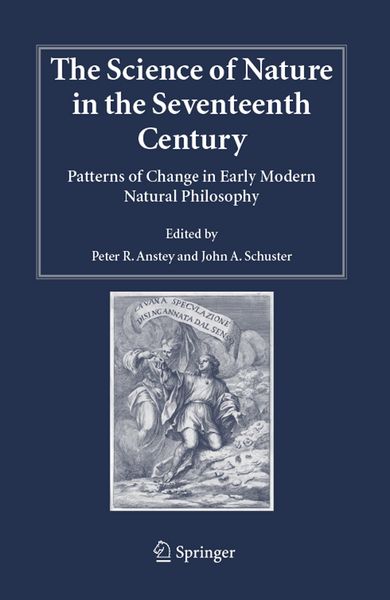
Produktbild: The Science of Nature in the Seventeenth Century
Band 19 - 12%

The Science of Nature in the Seventeenth Century Patterns of Change in Early Modern Natural Philosophy

12% sparen

95,99 € UVP 109,99 €

inkl. gesetzl. MwSt., Versandkostenfrei


Beschreibung

One of the hallmarks of the modern world has been the stunning rise of the natural sciences. The exponential expansion of scientific knowledge and the accompanying technology that so impact on our daily lives are truly remarkable. But what is often taken for granted is the enviable epistemic-credit rating...

Beschreibung

One of the hallmarks of the modern world has been the stunning rise of the natural sciences. The exponential expansion of scientific knowledge and the accompanying technology that so impact on our daily lives are truly remarkable. But what is often taken for granted is the enviable epistemic-credit rating of scientific knowledge: science is authoritative, science inspires confidence, science is right. Yet it has not always been so. In the seventeenth century the situation was markedly different: competing sources of authority, shifting disciplinary boundaries, emerging modes of experimental practice and methodological reflection were some of the constituents in a quite different mélange in which knowledge of nature was by no means p- eminent. It was the desire to probe the underlying causes of the shift from the early modern ‘nature-knowledge’ to modern science that was one of the stimuli for the ‘Origins of Modernity: Early Modern Thought 1543–1789’ conference held in Sydney in July 2002. How and why did modern science emerge from its early modern roots to the dominant position which it enjoys in today’s post-modern world? Under the auspices of the International Society for Intellectual History, The University of New South Wales and The University of Sydney, a group of historians and philosophers of science gathered to discuss this issue. However, it soon became clear that a prior question needed to be settled first: the question as to the precise nature of the quest for knowledge of the natural realm in the seventeenth century.

Produktdetails

Einband

Gebundene Ausgabe

Erscheinungsdatum

23.12.2005

Abbildungen

XII, 250 p.

Herausgeber Peter R. Anstey + weitere

Produktdetails

Einband

Gebundene Ausgabe

Erscheinungsdatum

23.12.2005

Abbildungen

XII, 250 p.

Herausgeber
Verlag Springer Netherland
Seitenzahl

250

Maße (L/B/H)

24,9/16,7/1,7 cm

Gewicht

625 g

Auflage

2005 edition

Sprache

Englisch

ISBN

978-1-4020-3603-3

Herstelleradresse

Libri GmbH
Europaallee 1
36244 Bad Hersfeld
DE

Email: gpsr@libri.de

Noch keine Bewertungen vorhanden

Verfassen Sie die erste Bewertung zu diesem Artikel

Helfen Sie anderen Kundinnen und Kunden durch Ihre Meinung.

Kundinnen und Kunden meinen

Bewertungen (0)

  • Produktbild: The Science of Nature in the Seventeenth Century
  • The Onset of the Scientific Revolution.- ‘Waterworld’: Descartes’ Vortical Celestial Mechanics.- Circular Argument.- From Mechanics to Mechanism.- The Autonomy of Natural Philosophy.- Physico-Theology and the Mixed Sciences.- The Saturn Problem.- Experimental Versus Speculative Natural Philosophy.