KI-Beratung Beta

Gutscheinbedingungen

**Gültig bis 05.10.2026 ab einem Mindestbestellwert von 30€ auf Spielzeug, Schreibwaren, Filme, Geschenke & Trends, Musik, tolino eReader & Zubehör, Hörbücher und Hörbuch-Downloads, nicht preisgebundene Bücher und Kalender online auf thalia.at und in der Thalia App. Einzelne Artikel können ausgeschlossen sein. Aufgrund der Buchpreisbindung sind deutschsprachige Bücher und eBooks ausgenommen. Zusätzlich ausgenommen sind Abos & Flatrates, Games, Geschenkkarten/-boxen, Shelfies, Software, Zeitschriften sowie einzelne Artikel von tonies®. Pro Einkauf einmal einlösbar. Nur gültig mit im Onlineshop hinterlegter Bonuscard. Click & Collect nur bei Onlinevorabzahlung möglich. Keine Barauszahlung. Nicht kombinierbar mit anderen Aktionen und Gutscheinen. Gutschein wird auf max. 500€ Bestellwert angerechnet. Nicht gültig für Versandkosten und Services. Preisgebundene Artikel sind vom Mindestbestellwert ausgeschlossen.

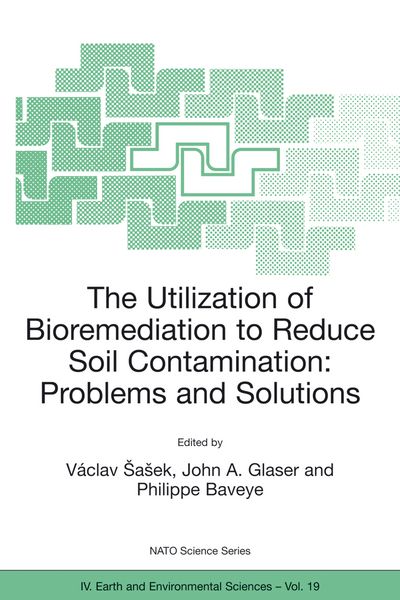
  • Produktbild: The Utilization of Bioremediation to Reduce Soil Contamination: Problems and Solutions
  • Produktbild: The Utilization of Bioremediation to Reduce Soil Contamination: Problems and Solutions
Band 19

The Utilization of Bioremediation to Reduce Soil Contamination: Problems and Solutions

Aus der Reihe NATO Science Series: IV:

192,99 €

inkl. gesetzl. MwSt., Versandkostenfrei


Beschreibung

Produktdetails

Einband

Taschenbuch

Erscheinungsdatum

28.02.2003

Herausgeber

Václav Sasek + weitere

Verlag

Springer Netherland

Seitenzahl

417

Maße (L/B/H)

23,5/15,5/2,4 cm

Gewicht

661 g

Auflage

Softcover reprint of the original 1st edition 2003

Sprache

Englisch

ISBN

978-1-4020-1142-9

Beschreibung

Produktdetails

Einband

Taschenbuch

Erscheinungsdatum

28.02.2003

Herausgeber

Verlag

Springer Netherland

Seitenzahl

417

Maße (L/B/H)

23,5/15,5/2,4 cm

Gewicht

661 g

Auflage

Softcover reprint of the original 1st edition 2003

Sprache

Englisch

ISBN

978-1-4020-1142-9

Herstelleradresse

Springer-Verlag GmbH
Tiergartenstr. 17
69121 Heidelberg
DE

Email: ProductSafety@springernature.com

Noch keine Bewertungen vorhanden

Verfassen Sie die erste Bewertung zu diesem Artikel

Helfen Sie anderen Kundinnen und Kunden durch Ihre Meinung.

Kundinnen und Kunden meinen

Bewertungen (0)

  • Produktbild: The Utilization of Bioremediation to Reduce Soil Contamination: Problems and Solutions
  • Produktbild: The Utilization of Bioremediation to Reduce Soil Contamination: Problems and Solutions
  • Rapid Detection/Identification of Microbes, Bacterial Spores, Microbial Communities, and Metabolic Activities in Environmental Matrices.- Comparison of Effective Organisms in Bioremediation Processes: Potential Use of Nucleic Acid Probes to Estimate Cyanide Degradation in Situ.- Modern Methods for Estimating Soil Microbial Biomass and Diversity: An Integrated Approach.- Recent Advances in the Biodegradation of Polycyclic Aromatic Hydrocarbons by Mycobacterium Species.- Toxic Metal Contamination Treatment with Microbes.- Aerobic Biodegradation of Polychlorinated Biphenyls (PCBs): The Fate, Distribution, Kinetics and Enhancement of PCB Biodegradation Efficacy in the Bacterial Cell Suspension of Pseudomonas stutzeri.- Adsorption of Heavy Metals to Microbial Biomass: Use of Biosorption for Removal of Metals from Solutions.- Nonenzymic Degradation and Decolorization of Recalcitrant Compounds.- The Impact of Sulfonation Pattern on Indigo Degradation by Phanerochaete chrysosporium Ligninolytic Enzymes.- Screening of Fungal Strains for Remediation of Water and Soil Contaminated with Synthetic Dyes.- Effect of Countermeasures of Radionuclide Uptake by Agricultural Plants.- Low-Cost Microbiotests for Toxicity Monitoring during Bioremediation of Contaminated Soils.- Application of Bioassays for Site-Specific Risk Assessment.- Effect of PAH-Contaminated Soil on some Plants and Microorganisms.- Development of immunomicroscopic methods for bioremediation.- Ecotoxicological Evaluation of PAH-Contaminated Soil Using Earthworms.- Use of Bioassays in Determining the Ecotoxicity of Industrial Soils.- Genotoxicity Estimation in Soils Contaminated with Polycyclic Aromatic Hydrocarbons after Biodegradation.- Ecotoxicological Hazard Assessment of Solid-Phase Samples.- Monitoring of Polychlorinated Biphenyls in Slovak Freshwater Sediments: Use of Semipermeable Membrane Devices.- Biopiles for Remediation of Petroleum-Contaminated Soils: A Polish Case Study.- Why mycoremediations have not yet come into practice.- From Laboratory to Industrial Scale: Composting of Polluted Soils from Former Coal Industry and Gas Plants: Future Research Needs.- Plant Biotechnology for the Removal of Organic Pollutants and Toxic Metals from Wastewaters and Contaminated Sites: Phytoremediation.- Consideration of Plant-Based Remediation and Restoration of Contaminated Sites Containing Heavy Metals: The Canadian Experience.- Combined Removal of Oil, Toxic Heavy Metals and Arsenic from Polluted Soil.- Landfarming Framework for Sustainable Soil Bioremediation.- Spent Mushroom Substrate: White-Rot Fungi in Aged Creosote- Contaminated Soil.- Bioremediation of PCBs from Contaminated Soil.- Problems of Soil Renovation on Former Military Sites in Lithuania.- The Capacity of Agricultural Soils to Auto-Regulate Bioremediation of Olive-Mill Wastewaters.- Accumulation of Organic Contamination in Plant roots and the Influence of Plant Rhizosphere on Removal of PAH, TPH and Heavy Oil Fractions from Soil.- Perspectives of Stable Isotope Approaches in Bioremediation Research.- Screening of Litter Decomposing Fungi for Degradation of Polycyclic Aromatic Hydrocarbons (PAH), Phenanthrene and benzo[a]pyrene.- Photosystem II-Based Biosensors for Phytoremediation.- Degradation of Polychlorinated Biphenyls (PCBs) in Contaminated Soil with Horseredish Peroxidase and Peroxidase from White Radish Raphatus sativus.- Successful Challenges during the Development and Application of Innovative Processes for the Bioremediation of Soils.- Current State of Bioremediation in the Czech Republic.