Gutscheinbedingungen

**Gültig bis 24.09.2026 ab einem Mindestbestellwert von 30€ auf Spielzeug, Schreibwaren, Filme, Geschenke & Trends, Musik, tolino eReader & Zubehör, Hörbücher und Hörbuch-Downloads, nicht preisgebundene Bücher und Kalender online auf thalia.at und in der Thalia App. Einzelne Artikel können ausgeschlossen sein. Aufgrund der Buchpreisbindung sind deutschsprachige Bücher und eBooks ausgenommen. Zusätzlich ausgenommen sind Abos & Flatrates, Games, Geschenkkarten/-boxen, Shelfies, Software, Zeitschriften sowie einzelne Artikel von tonies®. Pro Einkauf einmal einlösbar. Click & Collect nur bei Onlinevorabzahlung möglich. Keine Barauszahlung. Nicht kombinierbar mit anderen Aktionen und Gutscheinen. Gutschein wird auf max. 500€ Bestellwert angerechnet. Nicht gültig für Versandkosten und Services. Preisgebundene Artikel sind vom Mindestbestellwert ausgeschlossen.

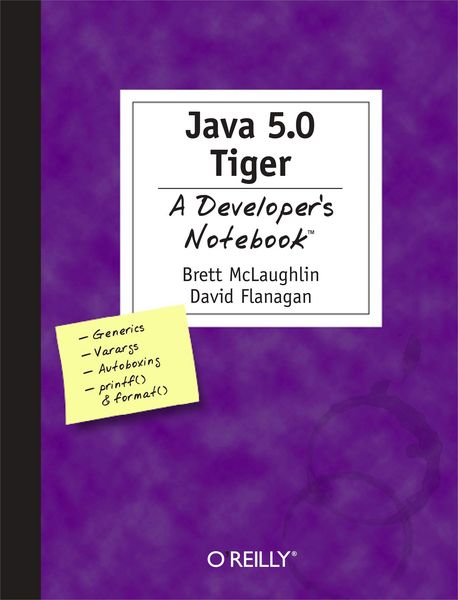
Produktbild: Java 5.0 Tiger

Java 5.0 Tiger

31,99 €

inkl. gesetzl. MwSt., Versandkostenfrei


Produktdetails

Einband

Taschenbuch

Erscheinungsdatum

03.08.2004

Verlag

O'Reilly Media

Seitenzahl

177

Maße (L/B/H)

24,7/16,5/1,3 cm

Gewicht

331 g

Sprache

Englisch

ISBN

978-0-596-00738-6

Produktdetails

Einband

Taschenbuch

Erscheinungsdatum

03.08.2004

Verlag

O'Reilly Media

Seitenzahl

177

Maße (L/B/H)

24,7/16,5/1,3 cm

Gewicht

331 g

Sprache

Englisch

ISBN

978-0-596-00738-6

Herstelleradresse

Libri GmbH
Europaallee 1
36244 Bad Hersfeld
DE

Email: gpsr@libri.de

Noch keine Bewertungen vorhanden

Verfassen Sie die erste Bewertung zu diesem Artikel

Helfen Sie anderen Kundinnen und Kunden durch Ihre Meinung.

Kundinnen und Kunden meinen

Bewertungen (0)

  • Produktbild: Java 5.0 Tiger
  • Copyright;
    The Developer's Notebook Series;
    Notebooks Are...;
    Notebooks Aren't...;
    Organization;
    Preface;
    Organization;
    How This Book Was Written;
    About the Examples;
    Conventions Used in This Book;
    How to Contact Us;
    Acknowledgments from Brett;
    Acknowledgments from David;
    Chapter 1: What's New?;
    1.1 Working with Arrays;
    1.2 Using Queues;
    1.3 Ordering Queues Using Comparators;
    1.4 Overriding Return Types;
    1.5 Taking Advantage of Better Unicode;
    1.6 Adding StringBuilder to the Mix;
    Chapter 2: Generics;
    2.1 Using Type-Safe Lists;
    2.2 Using Type-Safe Maps;
    2.3 Iterating Over Parameterized Types;
    2.4 Accepting Parameterized Types as Arguments;
    2.5 Returning Parameterized Types;
    2.6 Using Parameterized Types as Type Parameters;
    2.7 Checking for Lint;
    2.8 Generics and Type Conversions;
    2.9 Using Type Wildcards;
    2.10 Writing Generic Types;
    2.11 Restricting Type Parameters;
    Chapter 3: Enumerated Types;
    3.1 Creating an Enum;
    3.2 Declaring Enums Inline;
    3.3 Iterating Over Enums;
    3.4 Switching on Enums;
    3.5 Maps of Enums;
    3.6 Sets of Enums;
    3.7 Adding Methods to an Enum;
    3.8 Implementing Interfaces with Enums;
    3.9 Value-Specific Class Bodies;
    3.10 Manually Defining an Enum;
    3.11 Extending an Enum;
    Chapter 4: Autoboxing and Unboxing;
    4.1 Converting Primitives to Wrapper Types;
    4.2 Converting Wrapper Types to Primitives;
    4.3 Incrementing and Decrementing Wrapper Types;
    4.4 Boolean Versus boolean;
    4.5 Conditionals and Unboxing;
    4.6 Control Statements and Unboxing;
    4.7 Method Overload Resolution;
    Chapter 5: varargs;
    5.1 Creating a Variable-Length Argument List;
    5.2 Iterating Over Variable-Length Argument Lists;
    5.3 Allowing Zero-Length Argument Lists;
    5.4 Specify Object Arguments Over Primitives;
    5.5 Avoiding Automatic Array Conversion;
    Chapter 6: Annotations;
    6.1 Using Standard Annotation Types;
    6.2 Annotating an Overriding Method;
    6.3 Annotating a Deprecated Method;
    6.4 Suppressing Warnings;
    6.5 Creating Custom Annotation Types;
    6.6 Annotating Annotations;
    6.7 Defining an Annotation Type's Target;
    6.8 Setting the Retention of an Annotation Type;
    6.9 Documenting Annotation Types;
    6.10 Setting Up Inheritance in Annotations;
    6.11 Reflecting on Annotations;
    Chapter 7: The for/in Statement;
    7.1 Ditching Iterators;
    7.2 Iterating over Arrays;
    7.3 Iterating over Collections;
    7.4 Avoiding Unnecessary Typecasts;
    7.5 Making Your Classes Work with for/in;
    7.6 Determining List Position and Variable Value;
    7.7 Removing List Items in a for/in Loop;
    Chapter 8: Static Imports;
    8.1 Importing Static Members;
    8.2 Using Wildcards in Static Imports;
    8.3 Importing Enumerated Type Values;
    8.4 Importing Multiple Members with the Same Name;
    8.5 Shadowing Static Imports;
    Chapter 9: Formatting;
    9.1 Creating a Formatter;
    9.2 Writing Formatted Output;
    9.3 Using the format( ) Convenience Method;
    9.4 Using the printf( ) Convenience Method;
    Chapter 10: Threading;
    10.1 Handling Uncaught Exceptions in Threads;
    10.2 Using Thread-Safe Collections;
    10.3 Using Blocking Queues;
    10.4 Specifying Timeouts for Blocking;
    10.5 Separating Thread Logic from Execution Logic;
    10.6 Using Executor as a Service;
    10.7 Using Callable Objects;
    10.8 Executing Tasks Without an ExecutorService;
    10.9 Scheduling Tasks;
    10.10 Advanced Synchronizing;
    10.11 Using Atomic Types;
    10.12 Locking Versus Synchronization;
    Colophon;