KI-Beratung Beta

Gutscheinbedingungen

**Gültig bis 18.11.2026 auf englischsprachige Klassiker (klassiker-32728) online auf thalia.at und in der Thalia App. Einzelne Artikel können ausgeschlossen sein. Ausgenommen sind preisgebundene Artikel & eBooks. Pro Einkauf einmal einlösbar. Click & Collect nur bei Onlinevorabzahlung möglich. Keine Barauszahlung. Nicht kombinierbar mit anderen Aktionen und Gutscheinen. Gutschein wird auf max. 500€ Bestellwert angerechnet. Nicht gültig für Geschenkkarten, Versandkosten und Services.

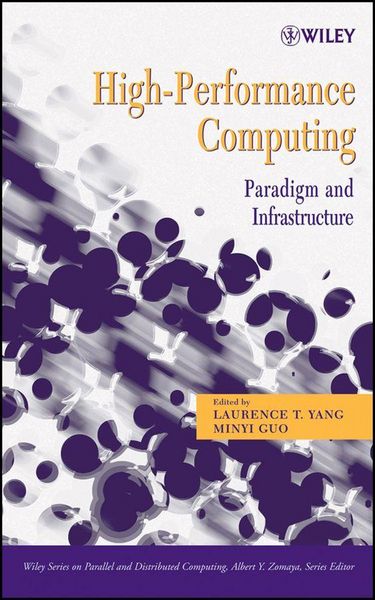
Produktbild: High-Performance Computing

High-Performance Computing Paradigm and Infrastructure

213,99 €

inkl. gesetzl. MwSt., Versandkostenfrei


Beschreibung

The state of the art of high-performance computing

Prominent researchers from around the world have gathered to present the state-of-the-art techniques and innovations in high-performance computing (HPC), including:

  • Programming models for parallel computing: graph-oriented programming (GOP), OpenMP,...

Beschreibung

The state of the art of high-performance computing

Prominent researchers from around the world have gathered to present the state-of-the-art techniques and innovations in high-performance computing (HPC), including:

  • Programming models for parallel computing: graph-oriented programming (GOP), OpenMP, the stages and transformation (SAT) approach, the bulk-synchronous parallel (BSP) model, Message Passing Interface (MPI), and Cilk
  • Architectural and system support, featuring the code tiling compiler technique, the MigThread application-level migration and checkpointing package, the new prefetching scheme of atomicity, a new "receiver makes right" data conversion method, and lessons learned from applying reconfigurable computing to HPC
  • Scheduling and resource management issues with heterogeneous systems, bus saturation effects on SMPs, genetic algorithms for distributed computing, and novel task-scheduling algorithms
  • Clusters and grid computing: design requirements, grid middleware, distributed virtual machines, data grid services and performance-boosting techniques, security issues, and open issues
  • Peer-to-peer computing (P2P) including the proposed search mechanism of hybrid periodical flooding (HPF) and routing protocols for improved routing performance
  • Wireless and mobile computing, featuring discussions of implementing the Gateway Location Register (GLR) concept in 3G cellular networks, maximizing network longevity, and comparisons of QoS-aware scatternet scheduling algorithms
  • High-performance applications including partitioners, running Bag-of-Tasks applications on grids, using low-cost clusters to meet high-demand applications, and advanced convergent architectures and protocols

High-Performance Computing: Paradigm and Infrastructure is an invaluable compendium for engineers, IT professionals, and researchers and students of computer science and applied mathematics.

Rezension

"In this book, the reader will obtain a bird s-eye view on the diversity of problems and approaches in the field of HPC." ( Computing Reviews.com , August 24, 2006)

Produktdetails

Einband

Gebundene Ausgabe

Erscheinungsdatum

01.08.2005

Abbildungen

Drawings: 100 B&W, 0 Color

Herausgeber Laurence T. Yang + weitere

Produktdetails

Einband

Gebundene Ausgabe

Erscheinungsdatum

01.08.2005

Abbildungen

Drawings: 100 B&W, 0 Color

Herausgeber
Verlag John Wiley & Sons Inc
Seitenzahl

816

Maße (L/B/H)

24,2/16,1/4,2 cm

Gewicht

1284 g

Auflage

1. Auflage

Sprache

Englisch

ISBN

978-0-471-65471-1

Herstelleradresse

Libri GmbH
Europaallee 1
36244 Bad Hersfeld
DE

Email: gpsr@libri.de

Noch keine Bewertungen vorhanden

Verfassen Sie die erste Bewertung zu diesem Artikel

Helfen Sie anderen Kundinnen und Kunden durch Ihre Meinung.

Kundinnen und Kunden meinen

Bewertungen (0)

Die Leseprobe wird geladen.
  • Produktbild: High-Performance Computing
  • Preface.

    Contributors.

    PART 1. PROGRAMMING MODEL.

    1. ClusterGOP: A High-Level Programming Environment for Clusters (Fan Chan, Jiannong Cao and Minyi Guo).

    1.1 Introduction.

    1.2 GOP Model and ClusterGOP Architecture.

    1.3 VisualGOP.

    1.4 The ClusterGOP Library.

    1.5 MPMD Programming Support.

    1.6 Programming Using ClusterGOP.

    1.7 Summary.

    2. The Challenge of Providing A High-Level Programming Model for High-Performance Computing (Barbara Chapman).

    2.1 Introduction.

    2.2 HPC Architectures.

    2.3 HPC Programming Models: The First Generation.

    2.4 The Second generation of HPC Programming Models.

    2.5 OpenMP for DMPs.

    2.6 Experiments with OpenMP on DMPs.

    2.7 Conclusions.

    3. SAT: Toward Structured Parallelism Using Skeletons (Sergei Gorlatch).

    3.1 Introduction.

    3.2 SAT: A Methodology Outline.

    3.3 Skeletons and Collective Operations.

    3.4 Case Study: Maximum Segment SUM (MSS).

    3.5 Performance Aspect in SAT.

    3.6 Conclusions and Related Work.

    4. Bulk-Synchronous Parallelism: An Emerging Paradigm of High-Performance Computing (Alexander Tiskin).

    4.1 The BSP Model.

    4.2 BSP Programming.

    4.3 Conclusions.

    5. Cilk Versus MPI: Comparing Two Parallel Programming Styles on Heterogenous Systems (John Morris, KyuHo Lee and JunSeong Kim).

    5.1 Introduction.

    5.2 Experiments.

    5.3 Results.

    5.4 Conclusion.

    6. Nested Parallelism and Pipelining in OpenMP (Marc Gonzalez, E. Ayguade, X. Martorell and J. Labarta).

    6.1 Introduction.

    6.2 OpenMP Extensions for Nested Parallelism.

    6.3 OpenMP Extensions for Thread Synchronization.

    6.4 Summary.

    7. OpenMP for Chip Multiprocessors (Feng Liu and Vipin Chaudhary).

    7.1 Introduction.

    7.2 3SoC Architecture Overview.

    7.3 The OpenMP Conpiler/Translator.

    7.4 Extensions to OpenMP for DSEs.

    7.5 Optimization for OpenMP.

    7.6 Implementation.

    7.7 Performance Evaluation.

    7.8 Conclusions.

    PART 2. ARCHITECTURAL AND SYSTEM SUPPORT.

    8. Compiler and Run-Time Parallelization Techniques for Scientific Computations on Distributed-Memory Parallel Computers (PeiZong Lee, Cheien-Min Wang and Jan-Jan Wu).

    8.1 Introduction.

    8.2 Background Material.

    8.3 Compiling Regular Programs on DMPCs.

    8.4 Compiler and Run-Time Support for Irregular Programs.

    8.5 Library Support for Irregular Applications.

    8.6 Related Works.

    8.7 Concluding Remarks.

    9. Enabling Partial-Cache Line Prefetching Through Data Compression (Youtao Zhang and Rajiv Gupta).

    9.1 Introduction.

    9.2 Motivation of Partial Cache-Line Perfetching.

    9.3 Cache Design Details.

    9.4 Experimental Results.

    9.5 Related Work.

    9.6 Conclusion.

    10. MPI Atomicity and Concurrent Overlapping I/O (Wei-Keng Liao, Alok Choudhary, Kenin Coloma, Lee Ward, Eric Russell and Neil Pundit).

    10.1 Introduction.

    10.2 Concurrent Overlapping I/O.

    10.3 Implementation Strategies.

    10.4 Experiment Results.

    10.5 Summary.

    11. Code Tiling: One Size Fits All (Jingling Xue and Qingguang Huang).

    11.1 Introduction.

    11.2 Cache Model.

    11.3 Code Tiling.

    11.4 Data Tiling.

    11.5 Finding Optimal Tile Sizes.

    11.6 Experimental Results.

    11.7 Related Work.

    11.8 Conclusion.

    12. Data Conversion for Heterogeneous Migration/Checkpointing (Hai Jiang, Vipin Chaudhary and John Paul Walters).

    12.1 Introduction.

    12.2 Migration and Checkpointing.

    12.3 Data Conversion.

    12.4 Coarse-Grain Tagged RMR in MigThread.

    12.5 Microbenchmarks and Experiments.

    12.6 Related Work.

    12.7 Conclusions and Future Work.

    13. Receiving-Message Prediction and Its Spec