KI-Beratung Beta

Gutscheinbedingungen

**Gültig am 12.10.2026 auf englische Krimis & Thriller (krimis-thriller-15521) online auf thalia.at und in der Thalia App. Einzelne Artikel können ausgeschlossen sein. Ausgenommen sind preisgebundene Artikel, Abos & Flatrates. Pro Einkauf einmal einlösbar. Click & Collect nur bei Onlinevorabzahlung möglich. Keine Barauszahlung. Nicht kombinierbar mit anderen Aktionen und Gutscheinen. Gutschein wird auf max. 500€ Bestellwert angerechnet. Nicht gültig für Geschenkkarten, Versandkosten und Services.

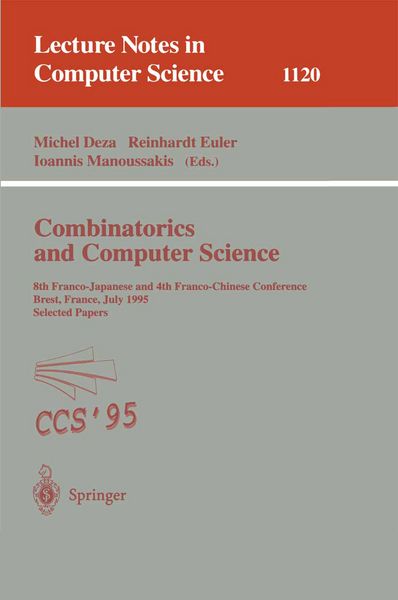
  • Produktbild: Advances in Structural and Syntactical Pattern Recognition
  • Produktbild: Advances in Structural and Syntactical Pattern Recognition
Band 1121

Advances in Structural and Syntactical Pattern Recognition 6th International Workshop, SSPR' 96, Leipzig, Germany, August, 20 - 23, 1996, Proceedings

51,99 €

inkl. gesetzl. MwSt., Versandkostenfrei


Beschreibung

Produktdetails

Einband

Taschenbuch

Erscheinungsdatum

07.08.1996

Abbildungen

X, 426 p.

Herausgeber

Petra Perner + weitere

Verlag

Springer Berlin

Seitenzahl

426

Maße (L/B/H)

23,5/15,5/2,3 cm

Gewicht

622 g

Auflage

1996

Sprache

Englisch

ISBN

978-3-540-61577-4

Beschreibung

Produktdetails

Einband

Taschenbuch

Erscheinungsdatum

07.08.1996

Abbildungen

X, 426 p.

Herausgeber

Verlag

Springer Berlin

Seitenzahl

426

Maße (L/B/H)

23,5/15,5/2,3 cm

Gewicht

622 g

Auflage

1996

Sprache

Englisch

ISBN

978-3-540-61577-4

Herstelleradresse

Springer-Verlag KG
Sachsenplatz 4-6
1201 Wien
AT

Email: ProductSafety@springernature.com

Noch keine Bewertungen vorhanden

Verfassen Sie die erste Bewertung zu diesem Artikel

Helfen Sie anderen Kundinnen und Kunden durch Ihre Meinung.

Kundinnen und Kunden meinen

Bewertungen (0)

  • Produktbild: Advances in Structural and Syntactical Pattern Recognition
  • Produktbild: Advances in Structural and Syntactical Pattern Recognition
  • Efficient recognition of a class of context-sensitive languages described by Augmented Regular Expressions.- Optimal and information theoretic syntactic pattern recognition for traditional errors.- The morphic generator grammatical inference methodology and multilayer perceptrons: A hybrid approach to acoustic modeling.- Two different approaches for cost-efficient Viterbi parsing with error correction.- Bounded parallelism in array grammars used for character recognition.- Comparison between the Inside-Outside algorithm and the Viterbi algorithm for stochastic context-free grammars.- Generalized morphological operators applied to map-analysis.- Derivatives in scale space.- On skeletonization in 4D images.- Extended Cascade-Correlation for syntactic and structural pattern recognition.- A metric of planar self-similar forms.- Including geometry in graph representations: A quadratic-time graph isomorphism algorithm and its applications.- Hierarchical discrete relaxation.- Relational indexing.- An evidential merit function to guide search in a semantic network based image analysis system.- Inexact graph matching with genetic search.- Automatic recognition of bidimensional models learned by grammatical inference in outdoor scenes.- Signal decomposition with multiscale learning algorithms.- Structural learning of character patterns for on-line recognition of handwritten Japanese characters.- Recognition of hand-printed characters using induct machine learning.- Opponent color processing based on neural models.- Knowledge acquisition by symbolic decision tree induction for interpretation of digital images in radiology.- Invariants and fixed structures lead the way to change.- Representing shape by line patterns.- Recognition of 3D objects from 2D images — Some issues.- Surface skeletonization of volume objects.- Peculiarities of structural analysis of image contours under various orders of scanning.- A structural analysis of curve deformation by discontinuous transformations.- Three dimensional computer vision for computer aided design and manufacturing applications.- Using weighted minutiae for fingerprint identification.- Recognizing 2-D rigid and non-rigid wire-shapes.- Structural and syntactic methods in line drawing analysis: To which extent do they work?.- Vector-based segmentation of text connected to graphics in engineering drawings.- Automatic resolution of object features from engineering drawings for 3D reconstruction.- The feedback approach to cartographic areal text placement.- A hierarchical representation for the reference database of on-line Chinese character recognition.- Substructure shape analysis for Kanji character recognition.- Recognition of hand-printed Chinese characters using Ripple Down Rules.- A fuzzy syntactic method for on-line handwriting recognition.