KI-Beratung Beta

Gutscheinbedingungen

**Gültig am 25.11.2026 auf fremdsprachige Bücher online auf thalia.at und in der Thalia App. Einzelne Artikel können ausgeschlossen sein. Ausgenommen sind preisgebundene Artikel & eBooks. Pro Einkauf einmal einlösbar. Click & Collect nur bei Onlinevorabzahlung möglich. Keine Barauszahlung. Nicht kombinierbar mit anderen Aktionen und Gutscheinen. Gutschein wird auf max. 500€ Bestellwert angerechnet. Nicht gültig für Geschenkkarten, Versandkosten und Services.

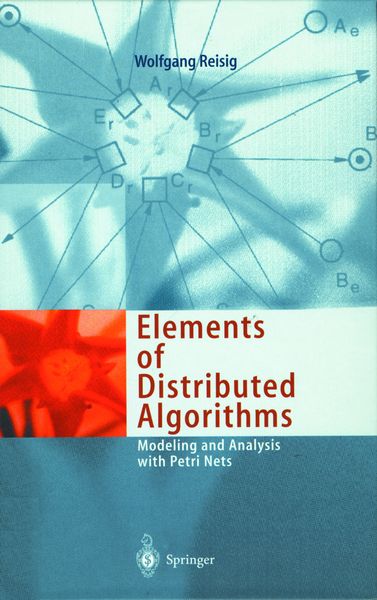
Produktbild: Elements of Distributed Algorithms

Elements of Distributed Algorithms Modeling and Analysis with Petri Nets

43,99 €

inkl. gesetzl. MwSt., Versandkostenfrei


Beschreibung

Distributed algorithms, essential to networks of all kinds, are presented using the highly intuitive and technically elegant Petri net technique in this text for students and practitioners. A variety of distributed algorithms are presented, and proven correct using temporal logic.

Beschreibung

Distributed algorithms, essential to networks of all kinds, are presented using the highly intuitive and technically elegant Petri net technique in this text for students and practitioners. A variety of distributed algorithms are presented, and proven correct using temporal logic.

Produktdetails

Einband

Gebundene Ausgabe

Erscheinungsdatum

20.08.1998

Abbildungen

XII, 302 p.

Verlag Springer Berlin

Produktdetails

Einband

Gebundene Ausgabe

Erscheinungsdatum

20.08.1998

Abbildungen

XII, 302 p.

Verlag Springer Berlin
Seitenzahl

302

Maße (L/B/H)

24,1/16/2,3 cm

Gewicht

601 g

Auflage

1998

Sprache

Englisch

ISBN

978-3-540-62752-4

Herstelleradresse

Springer-Verlag GmbH
Europaplatz 3
69115 Heidelberg
DE

Email: ProductSafety@springernature.com

Noch keine Bewertungen vorhanden

Verfassen Sie die erste Bewertung zu diesem Artikel

Helfen Sie anderen Kundinnen und Kunden durch Ihre Meinung.

Kundinnen und Kunden meinen

Bewertungen (0)

  • Produktbild: Elements of Distributed Algorithms
  • I. Elementary Concepts.- II. Case Studies.- III. Advanced Concepts.- IV. Case Studies.- V. Case Studies Continued: Acknowledged Messages.- VI. Case Studies Continued: Network Algorithms.- VII. State Properties of Elementary System Nets.- VIII. Interleaved Progress of Elementary System Nets.- IX. Concurrent Progress of Elementary System Nets.- X. State Properties of System Nets.- XI. Interleaved Progress of System Nets.- XII. Concurrent Progress of System Nets.- XIII. Formal Analysis of Case Studies.- References.