KI-Beratung Beta

Gutscheinbedingungen

**Gültig am 25.11.2026 auf fremdsprachige Bücher online auf thalia.at und in der Thalia App. Einzelne Artikel können ausgeschlossen sein. Ausgenommen sind preisgebundene Artikel & eBooks. Pro Einkauf einmal einlösbar. Click & Collect nur bei Onlinevorabzahlung möglich. Keine Barauszahlung. Nicht kombinierbar mit anderen Aktionen und Gutscheinen. Gutschein wird auf max. 500€ Bestellwert angerechnet. Nicht gültig für Geschenkkarten, Versandkosten und Services.

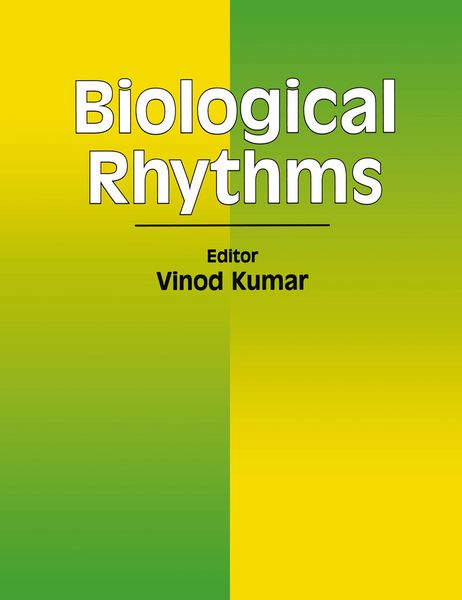
Produktbild: Biological Rhythms

Biological Rhythms

241,99 €

inkl. gesetzl. MwSt., Versandkostenfrei


Beschreibung

(Chapters 11 to 14) summarise important features of the biological clock at the level of whole animal covering all vertebrate classes (fish to mammal). Chapters 15 and 16 are on long term (seasonal) rhythms in plants and higher vertebrates. Short term rhythms (ultradian rhythms), the significance of...

Beschreibung

(Chapters 11 to 14) summarise important features of the biological clock at the level of whole animal covering all vertebrate classes (fish to mammal). Chapters 15 and 16 are on long term (seasonal) rhythms in plants and higher vertebrates. Short term rhythms (ultradian rhythms), the significance of having a clock system in animals living in extreme (arctic) environments, and the diversity of circadian responses to melatonin, the key endocrine element involved in regulation of biological rhythms, have been discussed in Chapters 17 to 19. Finally, a chapter on sensitivity to light of the photoperiodic clock is added which, using vertebrate examples, illustrates the importance of wavelength and intensity of light on circadian and non-circadian functions. A well-known expert writes each chapter. When presenting information, the text provides consistent thematic coverage and feeling for the methods of investigation. Reference citation within the body of the text adequately reflects the literature as subject is developed. A chapter begins with an abstract that enables a reader to know at the first glance the important points covered in that chapter. The chapter concludes with a full citation of references included in the text, which could be useful for further reading. The book ends with a comprehensive subject index that may be useful for quick searches.

Produktdetails

Einband

Gebundene Ausgabe

Erscheinungsdatum

01.05.2002

Abbildungen

XVI, 254 p. 47 illus., 6 illus. in color.

Herausgeber Vinod Kumar

Produktdetails

Einband

Gebundene Ausgabe

Erscheinungsdatum

01.05.2002

Abbildungen

XVI, 254 p. 47 illus., 6 illus. in color.

Herausgeber Vinod Kumar
Verlag Springer Berlin
Seitenzahl

254

Maße (L/B/H)

26/18,3/2 cm

Gewicht

657 g

Auflage

2002

Sprache

Englisch

ISBN

978-3-540-42853-4

Herstelleradresse

Springer-Verlag GmbH
Europaplatz 3
69115 Heidelberg
DE

Email: ProductSafety@springernature.com

Noch keine Bewertungen vorhanden

Verfassen Sie die erste Bewertung zu diesem Artikel

Helfen Sie anderen Kundinnen und Kunden durch Ihre Meinung.

Kundinnen und Kunden meinen

Bewertungen (0)

  • Produktbild: Biological Rhythms
  • 1. Biological Clocks at the End of the 20th Century.- 2. Clocks, Genes and Evolution: The Evolution of Circadian Organization.- 3. Circadian Frequency and Its Variability.- 4. Period Doubling of Rhythmic Water Regulation in Plants.- 5. The Genetics and Molecular Biology of Circadian Clocks.- 6. The Circadian Systems of Cells.- 7. Retinal Circadian Rhythms.- 8. Perception of Natural Zeitgeber Signals.- 9. Photoreceptors for the Circadian Clock of the Fruitfly.- 10. Photoentrainment of Vertebrate Circadian Rhythms.- 11. Circadian Organization in Fish and Amphibians.- 12. The Circadian Organization of Reptiles.- 13. The Circadian Pacemaking System of Birds.- 14. Neurochemical Aspects of the Entrainment of the Mammalian Suprachiasmatic Circadian Pacemaker.- 15. Photoperiodism in Plants.- 16. Photoperiodism in Birds and Mammals.- 17. Ultradian Rhythms.- 18. Biological Rhythms in Arctic Animals.- 19. Diversity in the Circadian Response to Melatonin in Mammals.- 20. Light Sensitivity of the Biological Clock.