• Produktbild: Beckenverletzungen / Pelvic Injuries
  • Produktbild: Beckenverletzungen / Pelvic Injuries
Band 266

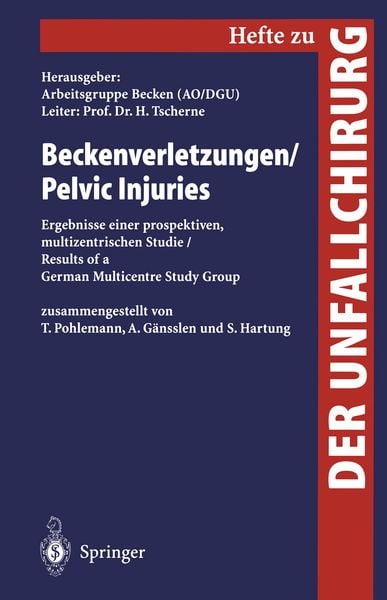
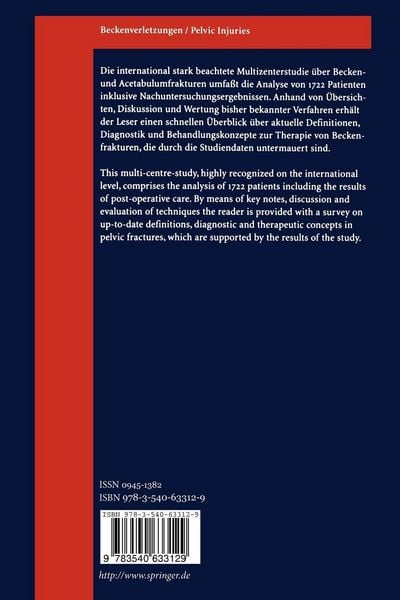
Beckenverletzungen / Pelvic Injuries Ergebnisse einer prospektiven, multizentrischen Studie / Results of a German Multicentre Study Group

57,50 €

inkl. gesetzl. MwSt., Versandkostenfrei


Beschreibung

Produktdetails

Einband

Taschenbuch

Erscheinungsdatum

26.11.1997

Abbildungen

XXIV, 402 S. 112 Abb.

Herausgeber

Arbeitsgruppe Becken (AO/DGU)

Verlag

Springer Berlin

Seitenzahl

402

Maße (L/B/H)

23,5/15,5/2,4 cm

Gewicht

645 g

Sprache

Deutsch

ISBN

978-3-540-63312-9

Beschreibung

Produktdetails

Einband

Taschenbuch

Erscheinungsdatum

26.11.1997

Abbildungen

XXIV, 402 S. 112 Abb.

Herausgeber

Arbeitsgruppe Becken (AO/DGU)

Verlag

Springer Berlin

Seitenzahl

402

Maße (L/B/H)

23,5/15,5/2,4 cm

Gewicht

645 g

Sprache

Deutsch

ISBN

978-3-540-63312-9

Herstelleradresse

Springer-Verlag KG
Sachsenplatz 4-6
1201 Wien
AT

Email: ProductSafety@springernature.com

Noch keine Bewertungen vorhanden

Verfassen Sie die erste Bewertung zu diesem Artikel

Helfen Sie anderen Kundinnen und Kunden durch Ihre Meinung.

Kundinnen und Kunden meinen

Bewertungen (0)

Weitere Artikel finden Sie in

  • Produktbild: Beckenverletzungen / Pelvic Injuries
  • Produktbild: Beckenverletzungen / Pelvic Injuries
  • Inhaltsverzeichnis/Contents.- 1. Einleitung.- 2. Methodik.- 2.1 Teilnehmer.- 2.2 Primärerfassung.- 2.3 Nachuntersuchungskonzept.- 2.4 Allgemeine Anmerkungen zu den Daten.- 3. Ergebnisse.- 3.1 Epidemiologische Auswertung der Gesamtstudie.- 3.2 Diagnostik.- 3.3 Frakturklassifikation.- 3.4 Verletzte Regionen am Beckenring.- 3.5 Notfalltherapie und Komplextrauma Becken.- 3.6 Therapie der Beckenfraktur.- 3.7 Verlauf und Komplikationen.- 3.8 Acetabulumfrakturen.- 4. Nachuntersuchung.- 4.1 Nachuntersuchungsrate.- 4.2 Nachuntersuchungsergebnisse nach isolierten A-Verletzungen.- 4.3 Nachuntersuchungsergebnisse nach isolierten B-Verletzungen.- 4.4 Nachuntersuchungsergebnisse nach isolierten C-Verletzungen.- 4.5 Nachuntersuchungsergebnisse nach komplexem Beckentrauma und A-Verletzung des Beckens.- 4.6 Nachuntersuchungsergebnisse nach komplexem Beckentrauma und B-Verletzung des Beckens.- 4.7 Nachuntersuchungsergebnisse nach komplexem Beckentrauma und C-Verletzung des Beckens.- 4.8 Nachuntersuchungsergebnisse nach isolierten Acetabulumfrakturen.- 4.9 Nachuntersuchungsergebnisse nach kombinierten Acetabulum- und Beckenringfrakturen.- 4.10 Nachuntersuchungsergebnisse nach beidseitigen Acetabulumfrakturen.- 4.11 Behandlung und “Outcome” von Patienten mit isoliert posterioren Beckenringverletzungen.- 4.12 Behandlung und “Outcome” von Patienten mit C-Verletzungen und ausschließlicher Behandlung mit Fixateur externe.- 5. Übersicht der Nachuntersuchungsergebnisse.- 5.1 Schmerzen.- 5.2 Neurologische Spätschäden.- 5.3 Urologische Spätfolgen.- 5.4 Klinisches Gesamtergebnis.- 5.5 Radiologisches Gesamtergebnis.- 5.6 Restitutio (“soziale Reintegration”).- 5.7 “Outcome” Becken.- 5.8 Welche Faktoren haben einen Einfluß auf das Ergebnis?.- 5.9 Welchen Einfluß hat dieOsteosyntheselokalisation auf das radiologische Ergebnis?.- 5.10 Spezielle Patientengruppen.- 6. Zusammenfassung der Kernaussagen.- 6.1 Letalität.- 6.2 Notfallbehandlung.- 6.3 Operative Verfahren.- 6.4 Konservative Behandlung.- 6.5 Die wichtigsten Ergebnisse nach Beckenfrakturen auf einen Blick.- 6.6 Die wichtigsten Ergebnisse nach Acetabulumfrakturen auf einen Blick.- 6.7 Erfahrungen aus dem Studienkonzept.- 1. Introduction.- 2. Methodology.- 2.1 Participants.- 2.2 Primary record collection.- 2.3 The follow-up examination.- 2.4 General remarks on the data.- 3. Results.- 3.1 Epidemiological evaluation of the entire study.- 3.2 Diagnostics.- 3.3 Classification of fractures.- 3.4 Location of fractures of the pelvic girdle.- 3.5 Primary treatment and complex pelvic trauma.- 3.6 Treatment of the pelvic fracture.- 3.7 Course and complications.- 3.8 Fracture of the acetabulum.- 4. Follow-up examinations.- 4.1 Details of follow-up.- 4.2 Results of the follow-up examinations of isolated type A injuries.- 4.3 Results of the follow-up examinations of patients with an isolated Type B injury.- 4.4 Results of the follow-up examinations of patients with an isolated Type C injury.- 4.5 The results of the follow-up examinations after complex pelvic trauma with Type A injury to the pelvis.- 4.6 The results of the follow-up examinations after complex pelvic trauma with Type B injury to the pelvis.- 4.7 The results of the follow-up examinations after complex pelvic trauma with Type C injury to the pelvis.- 4.8 Results of the follow-up examination after isolated fractures of the acetabulum.- 4.9 Results of the follow-up examination after combined fracture of acetabulum and pelvic girdle.- 4.10 Follow-up examination after bilateral fractures of the acetabulum.- 4.11 Treatment and outcomefor patients with isolated posterior pelvic girdle injuries.- 4.12 Treatment and outcome for patients with Type C injuries exclusively treated by external fixation.- 5. Summary of the follow-up.- 5.1 Pain.- 5.2 Long-term neurologic disabilities.- 5.3 Long-term urologic disabilities.- 5.4 Clinical result.- 5.5 Radiological result.- 5.6 Rehabilitation (“social reintegration”).- 5.7 Pelvic “Outcome”.- 5.8 Which factors do influence the long-term result?.- 5.9 The influence of the location of stabilization to the radiological result.- 5.10 Evaluation of specific patient groups.- 6. Summary and “key-notes”.- 6.1 Mortality.- 6.2 Emergency treatment.- 6.3 Techniques of stabilization.- 6.4 Nonoperative treatment.- 6.5 Short summary of the results after pelvic ring injuries.- 6.6 Short summary of results after acetabular fractures.- 6.7 Conclusions of the study design.- Anhang I/Appendix I.- Hannover Polytrauma-Schlüssel.- Hannover Polytrauma-Score.- Classification pelvic ring.- Classification of acetabular fractures.- Classification of sacrum fractures.- Bogen 1.- Bogen 2.- Bogen 3.- Bogen 4.- Sheet 1.- Sheet 2.- Sheet 3.- Sheet 4.- Nachuntersuchungsbogen-Follow-up Sheet.- Zusammenfassende Ergebnisbeurteilung (“Outcome”).- Summary of assessment of the outcome.- Anhang II/Appendix II.- Anhang III/Appendix III.- Explanation of the tables.- Literatur/Literature.