KI-Beratung Beta

Gutscheinbedingungen

**Gültig bis 05.10.2026 ab einem Mindestbestellwert von 30€ auf Spielzeug, Schreibwaren, Filme, Geschenke & Trends, Musik, tolino eReader & Zubehör, Hörbücher und Hörbuch-Downloads, nicht preisgebundene Bücher und Kalender online auf thalia.at und in der Thalia App. Einzelne Artikel können ausgeschlossen sein. Aufgrund der Buchpreisbindung sind deutschsprachige Bücher und eBooks ausgenommen. Zusätzlich ausgenommen sind Abos & Flatrates, Games, Geschenkkarten/-boxen, Shelfies, Software, Zeitschriften sowie einzelne Artikel von tonies®. Pro Einkauf einmal einlösbar. Nur gültig mit im Onlineshop hinterlegter Bonuscard. Click & Collect nur bei Onlinevorabzahlung möglich. Keine Barauszahlung. Nicht kombinierbar mit anderen Aktionen und Gutscheinen. Gutschein wird auf max. 500€ Bestellwert angerechnet. Nicht gültig für Versandkosten und Services. Preisgebundene Artikel sind vom Mindestbestellwert ausgeschlossen.

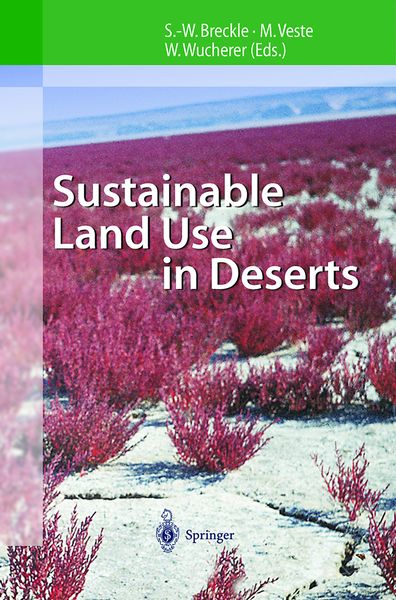
  • Produktbild: Sustainable Land Use in Deserts
  • Produktbild: Sustainable Land Use in Deserts
- 10%

Sustainable Land Use in Deserts

10% sparen

216,99 € UVP 241,99 €

inkl. gesetzl. MwSt., Versandkostenfrei


Beschreibung

Produktdetails

Einband

Gebundene Ausgabe

Erscheinungsdatum

04.12.2000

Abbildungen

XXIV, 465 p. 16 illus. in color.

Herausgeber

Siegmar-W. Breckle + weitere

Verlag

Springer Berlin

Seitenzahl

465

Maße (L/B/H)

24,1/16/3,1 cm

Gewicht

898 g

Auflage

2001

Sprache

Englisch

ISBN

978-3-540-67762-8

Beschreibung

Produktdetails

Einband

Gebundene Ausgabe

Erscheinungsdatum

04.12.2000

Abbildungen

XXIV, 465 p. 16 illus. in color.

Herausgeber

Verlag

Springer Berlin

Seitenzahl

465

Maße (L/B/H)

24,1/16/3,1 cm

Gewicht

898 g

Auflage

2001

Sprache

Englisch

ISBN

978-3-540-67762-8

Herstelleradresse

Springer-Verlag KG
Sachsenplatz 4-6
1201 Wien
AT

Email: ProductSafety@springernature.com

Noch keine Bewertungen vorhanden

Verfassen Sie die erste Bewertung zu diesem Artikel

Helfen Sie anderen Kundinnen und Kunden durch Ihre Meinung.

Kundinnen und Kunden meinen

Bewertungen (0)

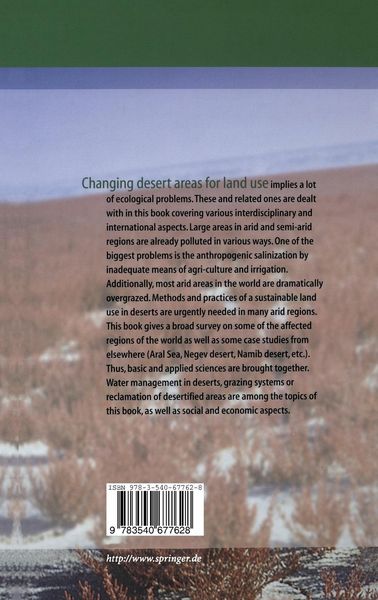
  • Produktbild: Sustainable Land Use in Deserts
  • Produktbild: Sustainable Land Use in Deserts
  • Deserts, Land Use and Desertification.- River Diversion, Irrigation, Salinization, Desertification — an Inevitable Succession.- I: The Aral Sea Crisis.- The Aral Sea Crisis Region.- Flora of the Dry Seafloor of the Aral Sea.- Vegetation Dynamics on the Dry Seafloor of the Aral Sea.- Methods of Conservation and Restoration of Vegetation Cover on the Aral Sea Coast.- Vegetation Dynamics on the Syrdarya Delta and Modern Land Use.- Ecological Basis for Botanical Diversity Conservation within the Amudarya and Syrdarya River Deltas.- The Tugai Forests of Floodplain of the Amudarya River: Ecology, Dynamics and Their Conservation.- Soil Crusts in the Amudarya River Delta: Properties and Formation.- Irrigation and Land Degradation in the Aral Sea Basin.- Ecology of the Aqueous Medium in the Area Surrounding the Aral Sea.- Potable Water: Research into Seasonal Changes and Conditions in the Aral Sea Region.- II: Salt Stress.- Halophytes on the Dry Sea Floor of the Aral Sea.- Halophytes: Structure and Adaptation.- Environmental State and an Analysis of Phytogenetic Resources of Halophytic Plants for Rehabilitation and Livestock Feeding in Arid and Sandy Deserts of Uzbekistan.- Salinity: A Major Enemy of Sustainable Agriculture.- III: Impact of Grazing.- Remarkable Differences in Desertification Processes in the Northern and Southern Richtersveld (Northern Namaqualand, Republic of South Africa).- Colour Plates.- How Grazing Turns Rare Seedling Recruitment Events to Non-Events in Arid Environments.- Vegetation Degradation in Northeastern Jordan.- Impact of Grazing on the Vegetation of South Sinai, Egypt.- Arid Rangeland Management Supported by Dynamic Spatially Explicit Simulation Models.- IV: Desertification Processes and Monitoring.- Remote Sensing of Surface Properties. The Keyto Land Degradation and Desertification Assessments.- Evaluation of Potential Land Use Sites in Dry Areas of Burkina Faso with the Help of Remote Sensing.- Degradation of the Vegetation in the Central Kyzylkum Desert (Uzbekistan).- Modern Geomorphological Processes on the Kazakhstanian Coast of the Caspian Sea and Problems of Desertification.- Anthropogenic Transformation of Desert Ecosystems in Mongolia.- Assessment of the Modern State of Sand—Desert Vegetation in Kazakhstan.- V: Reclamation.- Water-Harvesting Efficiency in Arid and Semiarid Areas.- The Effects of Landscape Structure on Primary Productivity in Source—Sink Systems.- Sedimentary Environments in the Desiccated Aral Sea Floor: Vegetation Recovery and Prospects for Reclamation.- Seeding Experiments on the Dry Aral Sea Floor for Phytomelioration.- Rehabilitation of Areas of Irrigation Now Derelicted Because of Strong Salinization in Ecologically Critical Zones of Priaralia.- Desert Soil Recultivation and Monitoring of (Phyto-) Toxicity: Pilot Project in Three Phases Lasting for 4 Years.- Contributions to a Sustainable Management of the Indigenous Vegetation in the Foreland of Cele Oasis — A Project Report from the Taklamakan Desert.- The Control of Drift Sand on the Southern Fringe of the Taklamakan Desert — an Example from the Cele-Oasis.- The Role of Biological Soil Crusts on Desert Sand Dunes in the Northwestern Negev, Israel.- Restoration of Disturbed Areas in the Mediterranean — a Case Study in a Limestone Quarry.- Indigenous Agroforestry for Sustainable Development of the Area around Lake Nasser, Egypt.- Ziziphus — a Multipurpose Fruit Tree for Arid Regions.- Root Morphology of Wheat Genotypes Grown in Residual Moisture.- Field Studies in Solar Photocatalysis for Detoxification of OrganicChemicals in Waters and Effluents.- VI: National Programs.- Activity of the Consulting Centre to Combat Desertification in Turkmenistan.- Desertification in China and Its Control.- Environmental Problems of the Southern Region of Kazakhstan.- National Strategy and Action Plan to Combat Desertification in Kazakstan.- VII: Social and Economic Aspects.- Economic-Demographic Strategies and Desertification: Interactions in Low-Income Countries.- Final Remarks.