Gutscheinbedingungen

**Gültig bis 14.09.2026 auf Spielzeug, Schreibwaren, Filme, Geschenke & Trends, Musik, tolino eReader & Zubehör, Hörbücher, nicht preisgebundene Bücher und Kalender in der Thalia App. Einzelne Artikel können ausgeschlossen sein. Aufgrund der Buchpreisbindung sind deutschsprachige Bücher und eBooks ausgenommen. Zusätzlich ausgenommen sind Abos & Flatrates, Games, Geschenkkarten/-boxen, Shelfies, Software, Zeitschriften sowie einzelne Artikel von tonies®. Pro Einkauf einmal einlösbar. Nur gültig mit im Onlineshop hinterlegter Bonuscard. Click & Collect nur bei Onlinevorabzahlung möglich. Keine Barauszahlung. Nicht kombinierbar mit anderen Aktionen und Gutscheinen. Gutschein wird auf max. 500€ Bestellwert angerechnet. Nicht gültig für Versandkosten und Services.

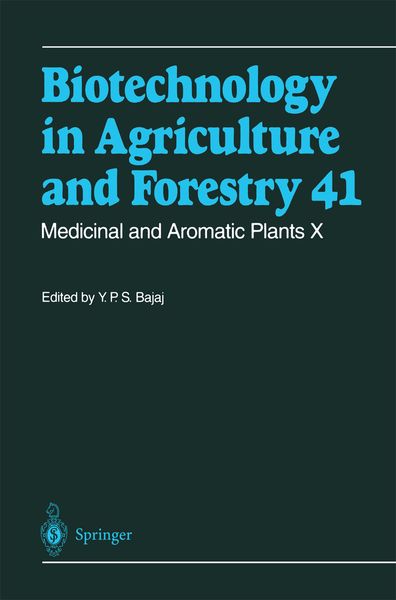
Produktbild: Medicinal and Aromatic Plants X
Band 41 - 12%

Medicinal and Aromatic Plants X

12% sparen

289,99 € UVP 329,99 €

inkl. gesetzl. MwSt., Versandkostenfrei


Beschreibung

Produktdetails

Einband

Gebundene Ausgabe

Erscheinungsdatum

18.11.1997

Abbildungen

XX, 460 p. 226 illus., 1 illus. in color.

Herausgeber

Y.P.S. Bajaj

Verlag

Springer Berlin

Seitenzahl

460

Maße (L/B/H)

24,1/16/3,5 cm

Gewicht

975 g

Auflage

1998

Sprache

Englisch

ISBN

978-3-540-62727-2

Beschreibung

Produktdetails

Einband

Gebundene Ausgabe

Erscheinungsdatum

18.11.1997

Abbildungen

XX, 460 p. 226 illus., 1 illus. in color.

Herausgeber

Y.P.S. Bajaj

Verlag

Springer Berlin

Seitenzahl

460

Maße (L/B/H)

24,1/16/3,5 cm

Gewicht

975 g

Auflage

1998

Sprache

Englisch

ISBN

978-3-540-62727-2

Herstelleradresse

Springer-Verlag GmbH
Tiergartenstr. 17
69121 Heidelberg
DE

Email: ProductSafety@springernature.com

Noch keine Bewertungen vorhanden

Verfassen Sie die erste Bewertung zu diesem Artikel

Helfen Sie anderen Kundinnen und Kunden durch Ihre Meinung.

Kundinnen und Kunden meinen

Bewertungen (0)

  • Produktbild: Medicinal and Aromatic Plants X
  • I Actinidia polygama (Japanese name Matatabi): In Vitro Culture, Micropropagation, and the Production of Monoterpenes and Triterpenoids.- II Alkanna tinctoria T. (Alkanets): In Vitro Culture and the Production of Alkannin and Other Secondary Metabolites.- III Arnebia euchroma: In Vitro Culture and the Production of Shikonin and Other Secondary Metabolites.- IV Campanula (Bellflower) Species: In Vitro Culture, Micropropagation, and the Production of Anthocyanins, Polyacetylenes, and Other Secondary Metabolites.- V Catharanthus roseus (Periwinkle): In Vitro Culture, and High-Level Production of Arbutin by Biotransformation.- VI Centella asiatica (L.) Urban. (Pennywort): Cell Culture, Production of Terpenoïds, and Biotransformation Capacity.- VII Chenopodium album L. (Fat Hen): In Vitro Cell Culture, and Production of Secondary Metabolites (Phytosterols and Ecdysteroids).- VIII Cornus kousa (Dogwood): In Vitro Culture, and the Production of Tannins and Other Phenolic Compounds.- IX Cynara cardunculus subsp. flavescens (Cardoon): In Vitro Culture, and the Production of Cyprosins — Milk Clotting Enzymes.- X Ephedra Species: In Vitro Culture, Micropropagation and the Production of Ephedrine and Other Alkaloids.- XI Euglena gracilis Z: Biotransformation of Terpenoids and Related Compounds.- XII Haplophyllum patavinum (L.) G. Don fil. (Paduan rue): In Vitro Regeneration, and the Production of Coumarin Compounds.- XIII Morus Species (Mulberry): In Vitro Culture, Micropropagation, and the Formation of Mulberrofuran, Kuwanol, and Other Secondary Metabolites.- XIV Oenothera Species (Evening Primrose): In Vitro Regeneration, Production of Flavonoids, Fatty Acids, and Other Secondary Metabolites.- XV Otacanthus Species: In Vitro Culture, Plant Propagation, and the Production ofEssential Oil.- XVI Oxalis Species: In Vitro Culture, Micropropagation, and the Formation of Anthocyanins.- XVII Polypodium vulgare L. (Wood Fern): In Vitro Cultures and the Production of Phytoecdysteroids.- XVIII Rosmarinus officinalis L. (Rosemary): In Vitro Culture, Regeneration of Plants, and the Level of Essential Oil and Monoterpenoid Constituents.- XIX Sesamum indicum L. (Sesame): In Vitro Culture, and the Production of Naphthoquinone and Other Secondary Metabolites.- XX Solanum mammosum L. (Terong Susu): In Vitro Culture and the Production of Steroidal Alkaloids and Other Secondary Metabolites.- XXI Taxus Species (Yew): In Vitro Culture, and the Production of Taxol and Other Secondary Metabolites.- XXII Tephrosia vogelii Hook f.: In Vitro Culture, and the Production of Rotenoids and Other Secondary Metabolites.