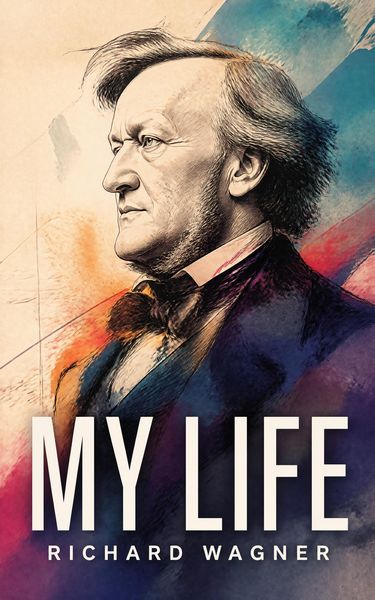
My Life A German Romantic Autobiography of Opera Reform, Political Exile, Artistic Ambition, and the Birth of Music Drama
-
- Einzelkauf Download ausgewählt
-
Sprache:Englisch
1,99 €
inkl. gesetzl. MwSt.Beschreibung
Produktdetails
Format
ePUB
Kopierschutz
Nein
Family Sharing
Ja
Text-to-Speech
Ja
Erscheinungsdatum
11.11.2025
Verlag
E-artnowSeitenzahl
755 (Printausgabe)
Dateigröße
1254 KB
Übersetzt von
William Ashton Ellis
Sprache
Englisch
EAN
4066339593879
Richard Wagner's *My Life* is an expansive, highly self-conscious autobiography tracing the composer's development from his childhood and early theatrical ambitions through the creation of his major operatic projects and the political upheavals surrounding the 1849 Dresden uprising. More than a chronological record, it is a work of artistic self-fashioning: Wagner interprets personal experience as the necessary prehistory of his revolutionary ideas about music drama, while presenting friendships, rivalries, and romantic attachments through a dramatic, often polemical narrative voice. Dictated to Cosima Wagner and shaped by retrospective justification, the book belongs to the nineteenth-century tradition of Künstlerroman and confessional autobiography, though its grand claims and selective omissions demand critical reading. Wagner wrote the memoir in the later decades of his life, when his reputation, financial circumstances, and cultural influence had become inseparable from the mythology surrounding Bayreuth. His recollections illuminate the intellectual and emotional sources of his aesthetic theories, his encounters with figures such as Liszt, and the ideological environment that informed his nationalism and antisemitism. The text consequently reveals both genuine artistic reflection and calculated self-exoneration. This volume is indispensable for readers of Wagner, opera, Romanticism, and modern cultural history. It offers vivid insight into the making of a monumental artistic persona, provided it is read alongside historical scholarship and with attention to its biases, silences, and theatricality.
Noch keine Bewertungen vorhanden
Verfassen Sie die erste Bewertung zu diesem Artikel
Helfen Sie anderen Kundinnen und Kunden durch Ihre Meinung.
Kurze Frage zu unserer Seite
Vielen Dank für Ihr Feedback
Wir nutzen Ihr Feedback, um unsere Produktseiten zu verbessern. Bitte haben Sie Verständnis, dass wir Ihnen keine Rückmeldung geben können. Falls Sie Kontakt mit uns aufnehmen möchten, können Sie sich aber gerne an unseren Kund*innenservice wenden.
zum Kundenservice