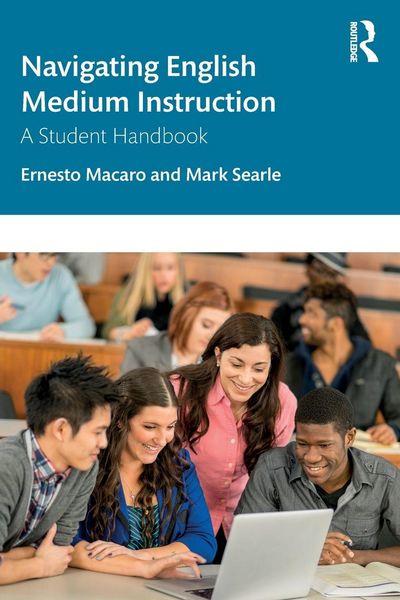
Navigating English Medium Instruction A Student Handbook
39,99 €
inkl. gesetzl. MwSt.,
Beschreibung
Produktdetails
ISBN
978-1-03-289298-6
Erscheinungsdatum
28.02.2025
Einband
Taschenbuch
Verlag
Taylor & FrancisSeitenzahl
136
Maße (L/B/H)
22,9/15,2/0,8 cm
Gewicht
209 g
Sprache
Englisch
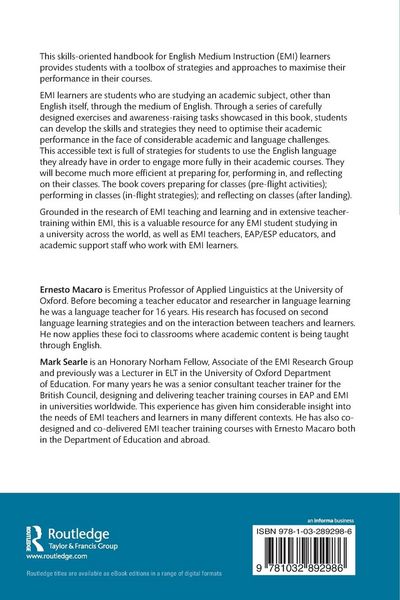
This skills-oriented handbook for English Medium Instruction (EMI) learners provides students with a toolbox of strategies and approaches to maximise their performance in their courses.
EMI learners are students who are studying an academic subject, other than English itself, through the medium of English. Through a series of carefully designed exercises and awareness-raising tasks showcased in this book, students can develop the skills and strategies they need to optimise their academic performance in the face of considerable academic and language challenges. This accessible text is full of strategies for students to use the English language they already have in order to engage more fully in their academic courses. They will become much more efficient at preparing for, performing in, and reflecting on their classes. The book covers preparing for classes (pre-flight activities); performing in classes (in-flight strategies); and reflecting on classes (after landing).
Grounded in the research of EMI teaching and learning and in extensive teacher-training within EMI, this is a valuable resource for any EMI student studying in a university across the world, as well as EMI teachers, EAP/ESP educators, and academic support staff who work with EMI learners.
Noch keine Bewertungen vorhanden
Verfassen Sie die erste Bewertung zu diesem Artikel
Helfen Sie anderen Kundinnen und Kunden durch Ihre Meinung.
Kurze Frage zu unserer Seite
Vielen Dank für Ihr Feedback
Wir nutzen Ihr Feedback, um unsere Produktseiten zu verbessern. Bitte haben Sie Verständnis, dass wir Ihnen keine Rückmeldung geben können. Falls Sie Kontakt mit uns aufnehmen möchten, können Sie sich aber gerne an unseren Kund*innenservice wenden.
zum Kundenservice