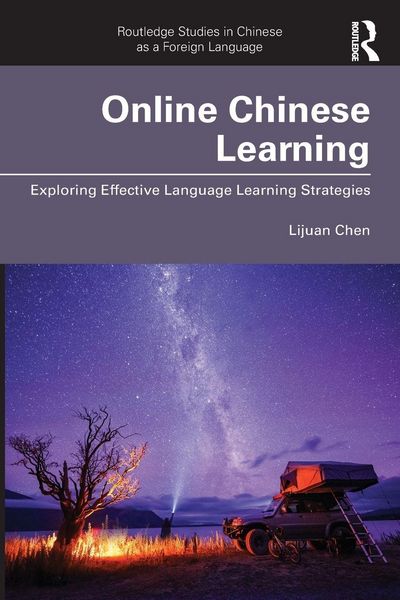
• Produktbild: Online Chinese Learning
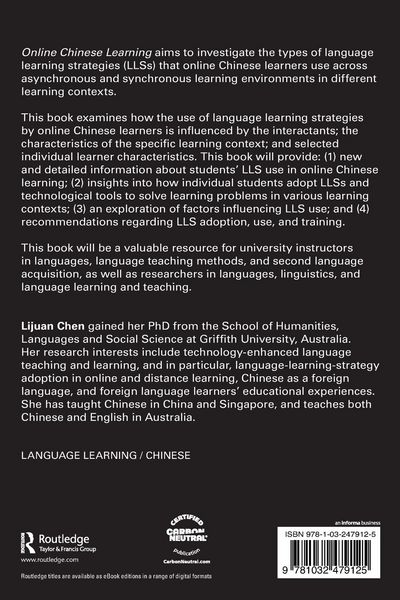
  • Produktbild: Online Chinese Learning

Online Chinese Learning Exploring Effective Language Learning Strategies

61,99 €

inkl. gesetzl. MwSt., Versandkostenfrei


Beschreibung

Produktdetails

ISBN

978-1-03-247912-5

Erscheinungsdatum

22.02.2024

Einband

Taschenbuch

Verlag

Taylor & Francis

Seitenzahl

244

Maße (L/B/H)

23,4/15,6/1,4 cm

Gewicht

409 g

Sprache

Englisch

Beschreibung

Produktdetails

ISBN

978-1-03-247912-5

Erscheinungsdatum

22.02.2024

Einband

Taschenbuch

Verlag

Taylor & Francis

Seitenzahl

244

Maße (L/B/H)

23,4/15,6/1,4 cm

Gewicht

409 g

Sprache

Englisch

Herstelleradresse

Libri GmbH
Europaallee 1
36244 Bad Hersfeld
DE

Email: gpsr@libri.de

Kundinnen und Kunden meinen

0 Bewertungen

Informationen zu Bewertungen

Zur Abgabe einer Bewertung ist eine Anmeldung im Konto notwendig. Die Authentizität der Bewertungen wird von uns nicht überprüft. Wir behalten uns vor, Bewertungstexte, die unseren Richtlinien widersprechen, entsprechend zu kürzen oder zu löschen.

Die Bewertungen sind nach Format, Anzahl Sterne und Datum sortiert.

Verfassen Sie die erste Bewertung zu diesem Artikel

Helfen Sie anderen Kund*innen durch Ihre Meinung

Kundinnen und Kunden meinen

0 Bewertungen filtern

Weitere Artikel finden Sie in

  • Produktbild: Online Chinese Learning
  • Produktbild: Online Chinese Learning
  • Preface.

    Chapter 1. Introduction.

    1.1 Chinese language learning around the world.

    1.2 Learning chanllenges and this book.

    1.3 The Online Chinese Programme and the Research Project.

    1.3.1 The online Chinese programme for this research project

    1.3.2 Participants.

    1.3.3 In-depth individual student studies.

    1.3.4 Data collection and research instruments.

    1.4 Organisation of the book.

    1.5 Audience.

    1.6 How this book is different .

    Chapter 2. Review of related study fields.

    2.1 Online learning and TELL.

    2.1.1 Online learning.

    2.1.2 TELL.

    2.2 Chinese as a particularly difficult language for English speakers to learn.

    2.3 LLSs and LLS research.

    2.3.1 Definition of LLS.

    2.3.2 LLS research.

    2.3.3 TELL task types and LLS adoption.

    2.3.4 LLS training.

    2.4 LLS research in online language learning.

    2.4.1 Affective strategies.

    2.4.2 Cognitive strategies.

    2.4.3 Social strategies.

    2.4.4 Memory strategies.

    2.4.5 Compensation strategies.

    2.4.6 Metacognitive strategies.

    2.4.7 LLSs specific to online learning.

    2.4.8 Summary of LLS research in online language learning.

    2.5 An overview of Chinese LLS research.

    2.5.1 LLS adoption in Chinese language learning.

    2.5.2 Chinese-character-learning strategy use.

    2.5.3 LLS use in Chinese speaking.

    2.5.4 LLS use in Chinese essay writing.

    2.5.5 Chinese LLS use in TELL.

    2.6 Different variables that influence LLS adoption.

    2.6.1 Individual differences.

    2.6.2 Motivation.

    2.6.3 Language proficiency.

    2.6.4 Learner autonomy.

    2.6.5 Age.

    2.7 Summary.

    Chapter 3. The repertoire of LLSs in online Chinese learning.

    3.1 Introduction.

    3.2 LLSs obtained from the self-reported data.

    3.2.1 LLS use by category.

    3.2.2 Affective strategies.

    3.2.3 Cognitive strategies.

    3.2.4 Social strategies.

    3.2.5 Memory strategies.

    3.2.6 Compensation strategies.

    3.2.7 Metacognitive strategies.

    3.3 LLSs obtained from the observed data.

    3.3.1 LLS adoption observed in the asynchronous learning environment

    3.3.2 LLS adoption observed in the synchronous learning environment

    3.4 Summary.

    Chapter 4. Factors influencing LLS adoption.

    4.1 Introduction.

    4.2 The impact of the learning contexts and interactants on the participants’ LLS use.

    4.2.1 The impact of the asynchronous and synchronous environments on the participants’ LLS use

    4.2.2 The impact of the interactants on the participants’ LLS use.

    4.3 The impact of the individual-learner characteristics on the participants’ LLS use.

    4.3.1 Motives for learning Chinese and LLS use.

    4.3.2 Learning goals and LLS use.

    4.3.3 Age and LLS use.

    4.3.4 Length of prior learning of Chinese and LLS use.

    4.4 Summary.

    Chapter 5. Individual LLS reports of the interviewees.

    5.1 Introduction.

    5.2 Student 5 (S5)

    5.2.1 Background information, learning motives, goals, difficulties and strengths.

    5.2.2 The key LLSs used by S5 and the tools used for these LLSs.

    5.2.3 Summary of S5’s LLS report

    5.3 Student 18 (S18)

    5.3.1 Background information, learning motives, goals, difficulties and strengths.

    5.3.2 The key LLSs used by S18 and the tools used for these LLSs.

    5.3.3 Summary of S18’s LLS report

    5.4 Student 8 (S8)

    5.4.1 Background information, learning motives, goals, difficulties and strengths.

    5.4.2 The key LLSs used by S8 and the tools used for these LLSs.

    5.4.3 Summary of S8’s LLS report

    5.5 Student 9 (S9)

    5.5.1 Background information, learning motives, goals, difficulties and strengths.

    5.5.2 The key LLSs used by S9 and the tools used for these LLSs.

    5.5.3 Summary of S9’s LLS report

    5.6 Student 10 (S10)

    5.6.1 Background information, learning motives, goals, difficulties and strengths.

    5.6.2 The key LLSs used by S10 and the tools used for these LLSs.

    5.6.3 Summary of S10’s LLS report

    5.7 Student 12 (S12)

    5.7.1 Background information, learning motives, goals, difficulties and strengths.

    5.7.2 The key LLSs used by S12 and the tools used for these LLSs.

    5.7.3 Summary of S12’s LLS report

    5.8 Student 13 (S13)

    5.8.1 Background information, learning motives, goals, difficulties and strengths.

    5.8.2 The key LLSs used by S13 and the tools used for these LLSs.

    5.8.3 Summary of S13’s LLS report

    5.9 Student 14 (S14)

    5.9.1 Background information, learning motives, goals, difficulties and strengths.

    5.9.2 The key LLSs used by S14 and the tools used for these LLSs.

    5.9.3 Summary of S14’s LLS report

    5.10 Student 15 (S15)

    5.10.1 Background information, learning motives, goals, difficulties and strengths.

    5.10.2 The key LLSs used by S15 and the tools used for these LLSs.

    5.10.3 Summary of S15’s LLS report

    5.11 Student 17 (S17)

    5.11.1 Background information, learning motives, goals, difficulties and strengths.

    5.11.2 The key LLSs used by S17 and the tools used for these LLSs.

    5.11.3 Summary of S17’s LLS report

    Chapter 6. Discussion and recommendations for online Chinese learning.

    6.1 Introduction.

    6.2 Key findings and recommendations in regard to LLS use in self-directed learning outside online classes.

    6.2.1 Affective strategies.

    6.2.2 Cognitive strategies.

    6.2.3 Social strategies.

    6.2.4 Memory strategies.

    6.2.5 Metacognitive strategies.

    6.2.6 Summary.

    6.3 Key findings and recommendations in regard to LLS use in assessment-task completion

    6.3.1 Cognitive strategies.

    6.3.2 Social strategies.

    6.3.3 Compensation strategies.

    6.3.4 Summary.

    6.4 Key findings and recommendations in regard to LLS use in the online class participation.

    6.4.1 Cognitive strategies.

    6.4.2 Social strategies.

    6.4.3 Summary.

    6.5 Two important observations from this research project

    6.5.1 The importance of technology in LLS use.

    6.5.2 The complexity of LLS classification.

    6.6 Summary.

    Chapter 7. Conclusion.

    7.1 Introduction.

    7.2 Contributions of this book.

    7.3 Implications for online language teaching and learning.

    7.4 Limitations of this research project.

    7.5 Recommendations for future research.

    Appendix I: Survey questionnaire.

    Appendix II: Interview questions.

    Index