KI-Beratung Beta

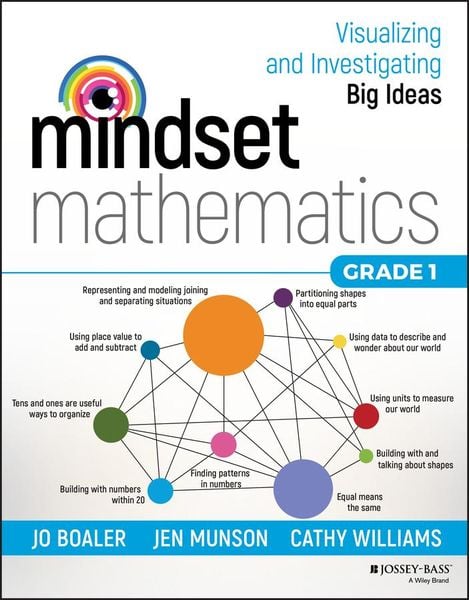
Produktbild: Mindset Mathematics: Visualizing and Investigating Big Ideas, Grade 1

Mindset Mathematics: Visualizing and Investigating Big Ideas, Grade 1

Aus der Reihe Mindset Mathematics

24,99 €

inkl. gesetzl. MwSt., zzgl. Versandkosten


  • Kostenlose Lieferung ab 30 € Einkaufswert
  • Versandkostenfrei für Bonuscard-Kund*innen

Beschreibung

Engage students in mathematics using growth mindset techniques   The most challenging parts of teaching mathematics are engaging students and helping them understand the connections between mathematics concepts. In this volume, you'll find a collection of low floor, high ceiling tasks that will help you...

Beschreibung

Engage students in mathematics using growth mindset techniques
 
The most challenging parts of teaching mathematics are engaging students and helping them understand the connections between mathematics concepts. In this volume, you'll find a collection of low floor, high ceiling tasks that will help you do just that, by looking at the big ideas at the first-grade level through visualization, play, and investigation.
 
During their work with tens of thousands of teachers, authors Jo Boaler, Jen Munson, and Cathy Williams heard the same message--that they want to incorporate more brain science into their math instruction, but they need guidance in the techniques that work best to get across the concepts they needed to teach. So the authors designed Mindset Mathematics around the principle of active student engagement, with tasks that reflect the latest brain science on learning. Open, creative, and visual math tasks have been shown to improve student test scores, and more importantly change their relationship with mathematics and start believing in their own potential. The tasks in Mindset Mathematics reflect the lessons from brain science that:
* There is no such thing as a math person - anyone can learn mathematics to high levels.
* Mistakes, struggle and challenge are the most important times for brain growth.
* Speed is unimportant in mathematics.
* Mathematics is a visual and beautiful subject, and our brains want to think visually about mathematics.
 
With engaging questions, open-ended tasks, and four-color visuals that will help kids get excited about mathematics, Mindset Mathematics is organized around nine big ideas which emphasize the connections within the Common Core State Standards (CCSS) and can be used with any current curriculum.

Produktdetails

ISBN

978-1-119-35862-6

Auflage

1. Auflage

Erscheinungsdatum

27.01.2021

Bundesländer

Baden-Württemberg + weitere

Produktdetails

ISBN

978-1-119-35862-6

Auflage

1. Auflage

Erscheinungsdatum

27.01.2021

Bundesländer
  • Baden-Württemberg
  • Bayern
  • Berlin
  • Brandenburg
  • Bremen
  • Hamburg
  • Hessen
  • Mecklenburg-Vorpommern
  • Niedersachsen
  • Nordrhein-Westfalen
  • Rheinland-Pfalz
  • Saarland
  • Sachsen
  • Sachsen-Anhalt
  • Schleswig-Holstein
  • Thüringen
Unterrichtsfächer

Mathematik

Klassenstufen

1. Klasse

Schulformen

Grundschule

Einband

Taschenbuch

Verlag John Wiley & Sons
Seitenzahl

352

Maße (L/B/H)

27,3/21,3/1,4 cm

Gewicht

950 g

Sprache

Englisch

Herstelleradresse

Libri GmbH
Europaallee 1
36244 Bad Hersfeld
DE

Email: gpsr@libri.de

Dazu passende Produkte

Noch keine Bewertungen vorhanden

Verfassen Sie die erste Bewertung zu diesem Artikel

Helfen Sie anderen Kundinnen und Kunden durch Ihre Meinung.

Kundinnen und Kunden meinen

Bewertungen (0)

Weitere Artikel finden Sie in

Die Leseprobe wird geladen.
  • Produktbild: Mindset Mathematics: Visualizing and Investigating Big Ideas, Grade 1
  • Introduction 1
     
    Low-Floor, High-Ceiling Tasks 2
     
    Youcubed Summer Camp 3
     
    Memorization versus Conceptual Engagement 4
     
    Mathematical Thinking, Reasoning, and Convincing 5
     
    Big Ideas 9
     
    Structure of the Book 9
     
    Note on Materials 17
     
    Manipulatives and Materials Used in This Book 18
     
    Activities for Building Norms 21
     
    Encouraging Good Group Work 21
     
    How Many Do You See? Learning to Reason, Convince, and Pose Questions 23
     
    Big Idea 1: Building with and Talking about Shapes 31
     
    Visualize: Build(ings) 33
     
    Play: Tangram Puzzles 40
     
    Investigate: Tangram Squares 52
     
    Big Idea 2: Tens and Ones Are Useful Ways to Organize 59
     
    Visualize: Organizing and Counting a Collection 61
     
    Play: How Many Dots? 68
     
    Investigate: Boxes of Pencils 74
     
    Big Idea 3: Representing and Modeling Joining and Separating Situations 81
     
    Visualize: Showing the Story 83
     
    Play: Playing with Problem Types 89
     
    Investigate: Library Wonders 99
     
    Big Idea 4: Using Data to Describe and Wonder about Our World 107
     
    Visualize: Organizing the Natural World 109
     
    Play: Displaying Data 115
     
    Investigate: Our Trash, Ourselves 124
     
    Big Idea 5: Equal Means the Same 133
     
    Visualize: Hungry, Hungry Monsters! 136
     
    Play: True or False? 155
     
    Investigate: Exploring Relations 165
     
    Big Idea 6: Building with Numbers within 20 175
     
    Visualize: Seeing Spots 177
     
    Play: Rolling Ten 186
     
    Investigate: Addition Table Patterns 195
     
    Big Idea 7: Finding Patterns in Numbers 203
     
    Visualize: Patterns in the Hundred Chart 205
     
    Play: Skipping across the Hundred Chart 213
     
    Investigate: Weaving Patterns 220
     
    Big Idea 8: Using Place Value to Add and Subtract 231
     
    Visualize: Recess! 233
     
    Play: Playing with Place Value across Problem Types 243
     
    Investigate: Making a Dollar 251
     
    Big Idea 9: Using Units to Measure Our World 259
     
    Visualize: Which One is Longer? 261
     
    Play: Measuring Our World in Cubes 267
     
    Investigate: Measuring with Cuisenaire Rods 275
     
    Big Idea 10: Partitioning Shapes into Equal Parts 281
     
    Visualize: Half and Half-of-a-Half 283
     
    Play: Analyzing Tangrams 293
     
    Investigate: What's in a Flag? 299
     
    Appendix 313
     
    1" Grid Paper 314
     
    Hundred Chart 315
     
    Grid Paper 316
     
    About the Authors 317
     
    Acknowledgments 319
     
    Index 321